2026 Goalkeepers Report
AI, equity, and the Choice We Can’t Delay
scroll to explore the report
a message from bill
Watch the video
The 2026 Reportat a glance
The choice is being made now.
AI could be a great equalizer—or widen the gap. This is not a long-range prediction. It's a present-tense choice.
Read the introductionLeft to the market, the rich get AI first
Left to the market, AI will be designed by and for the richest people in the world.
Explore the dataBuilt for frontline workers, it can work for everyone.
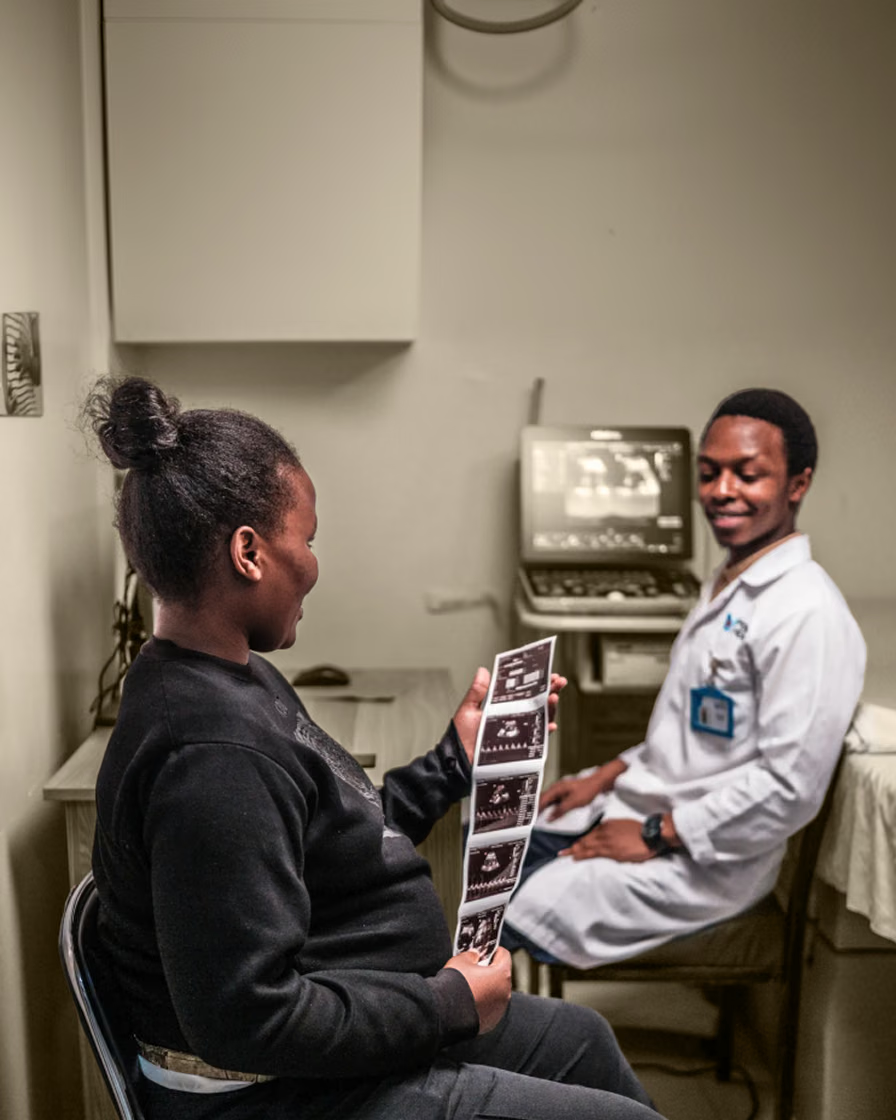
Making AI useful for the people and places where it could make the biggest difference is not an evolutionary leap. It's within reach.
Read call to action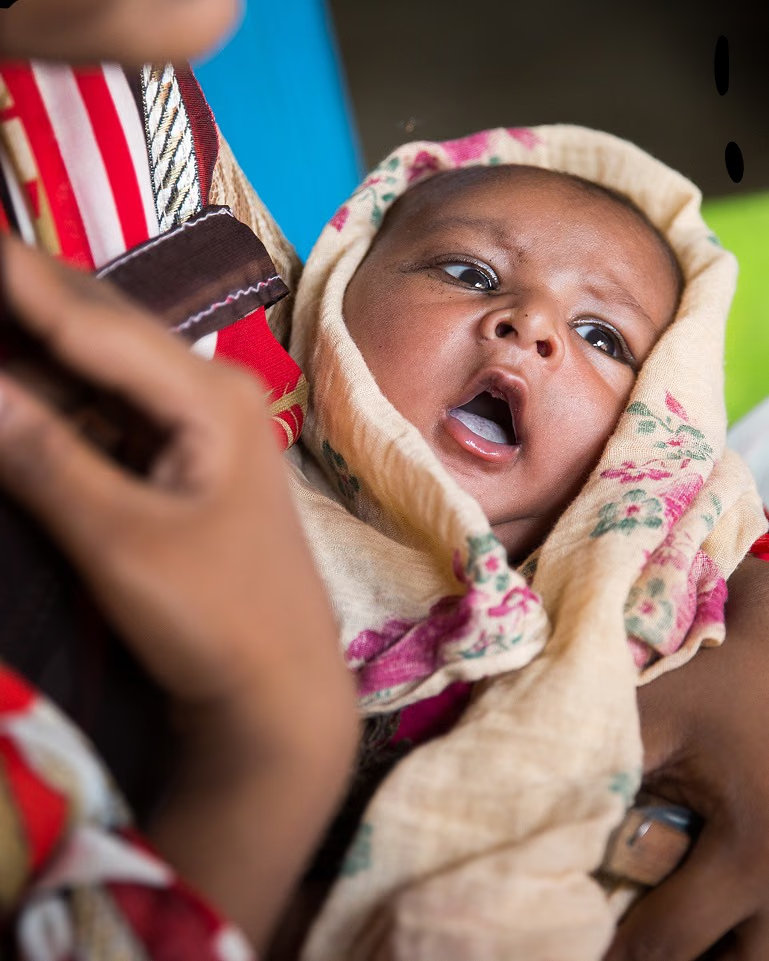
Nothing hasfelt like this
AI could be a great equalizer—or widen the gap. This is not a long-range prediction. It's a present-tense choice.
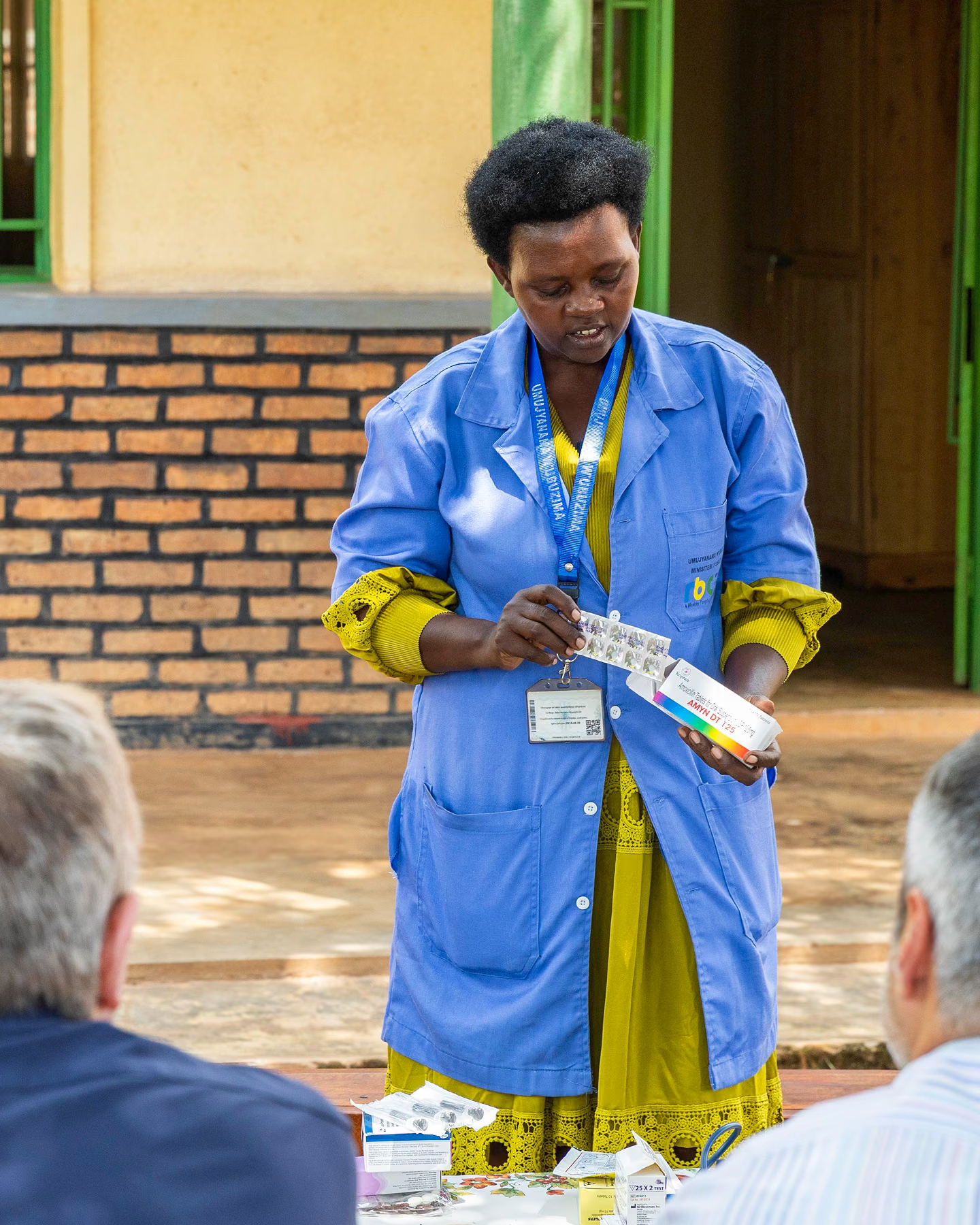

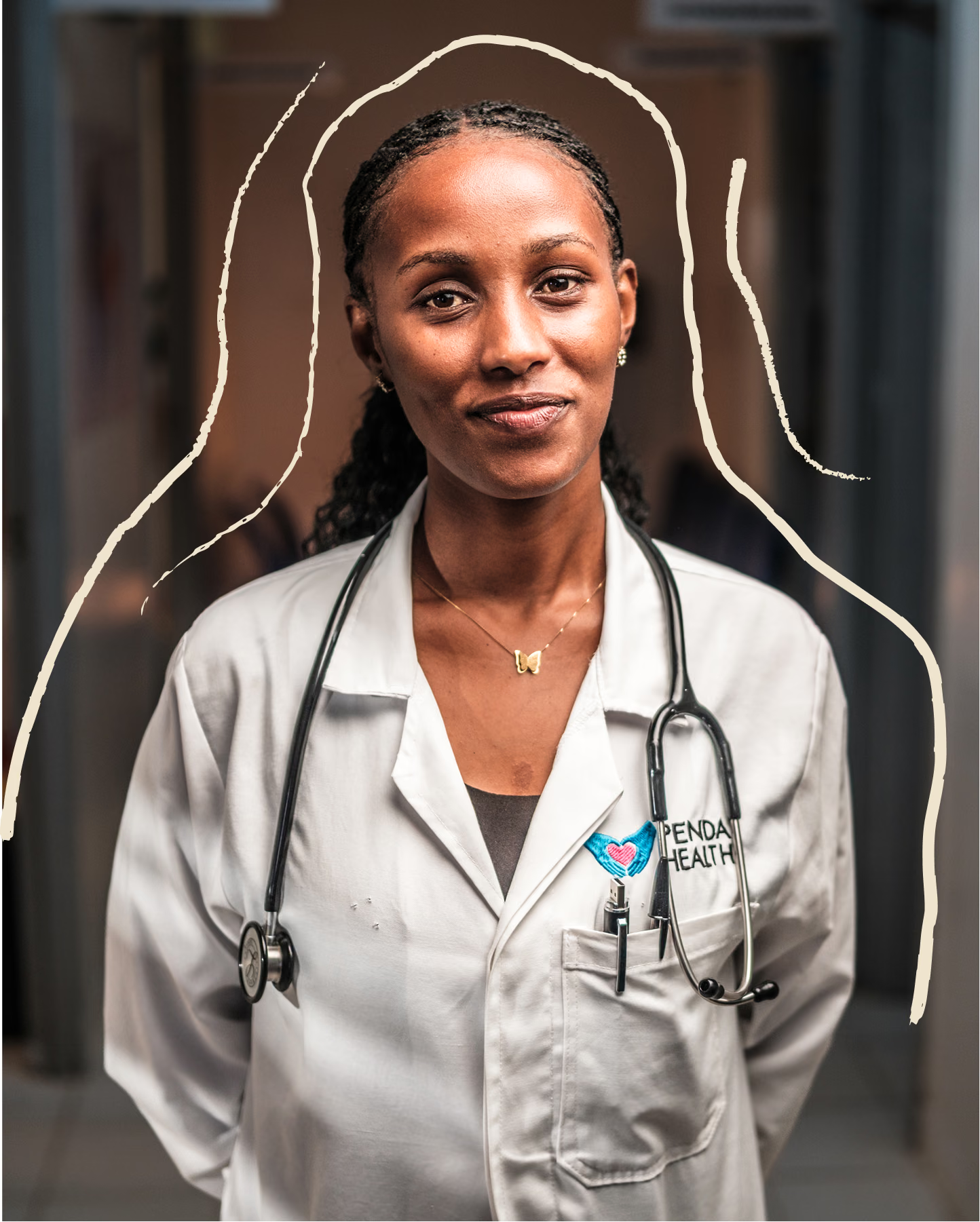
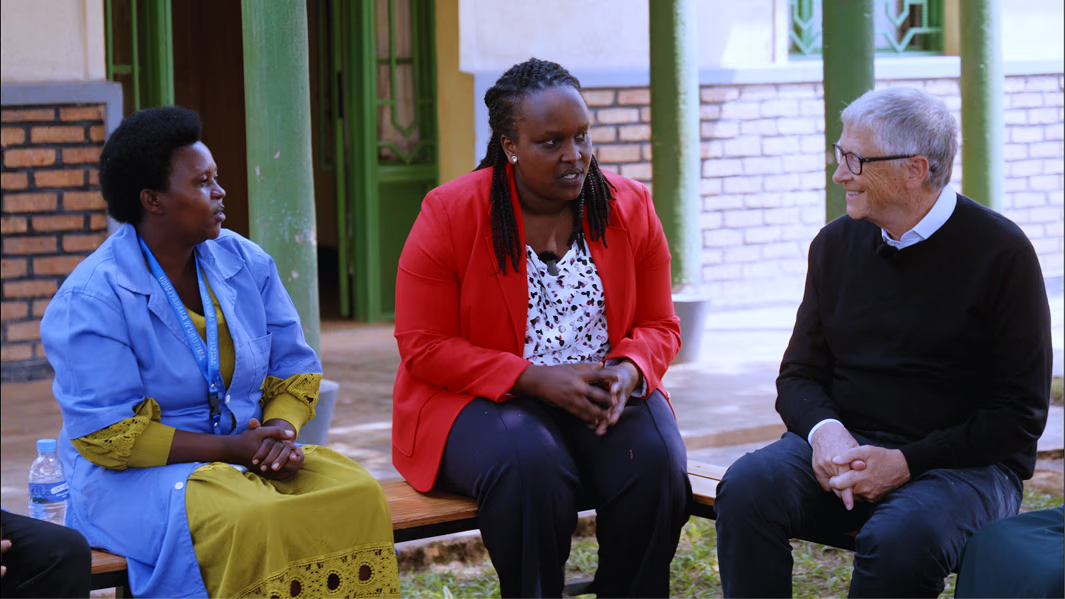
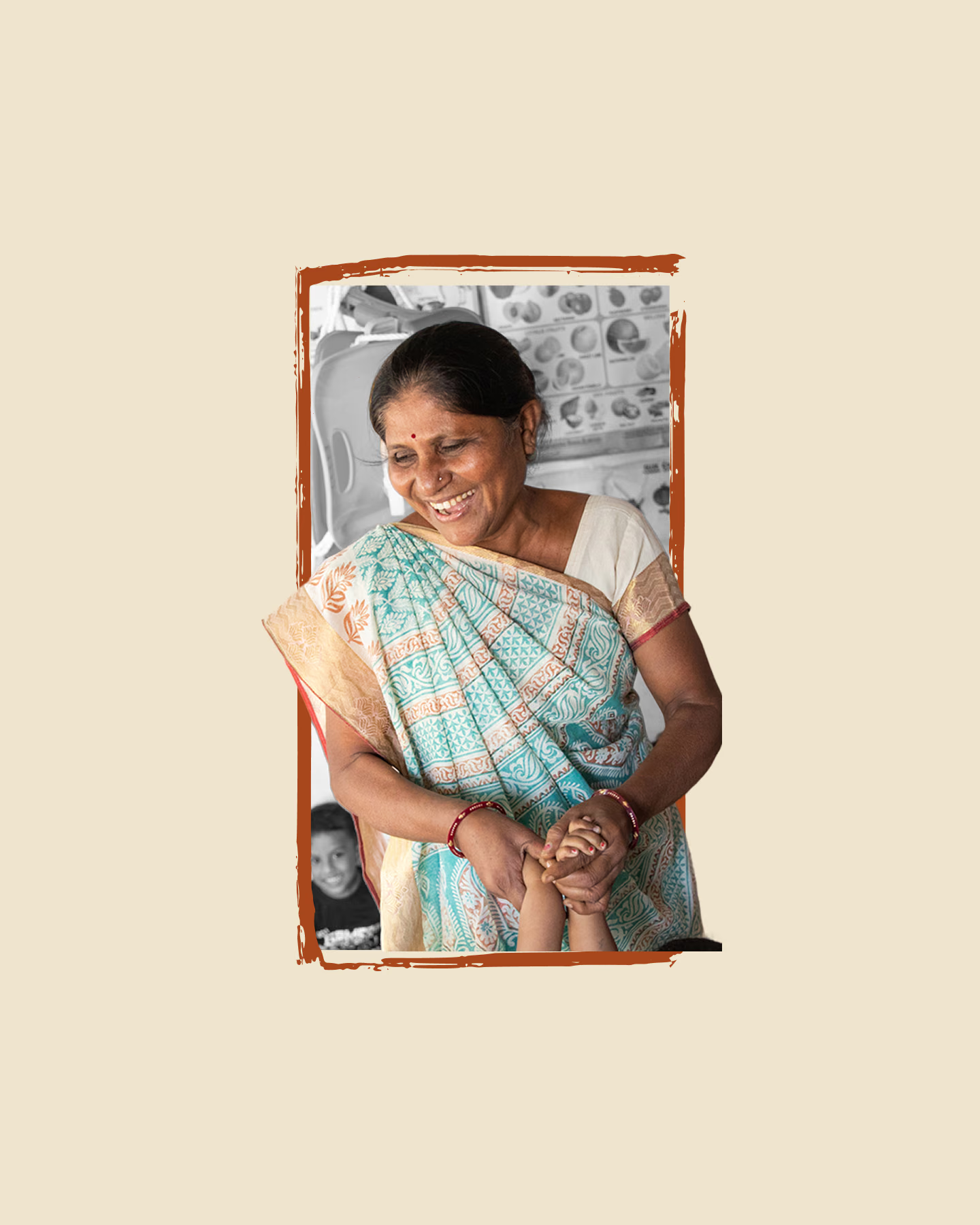
Earlier this year, I met Gaudence Ngendahayo, a community health worker in Mwulire, Rwanda.
For families in her community, she’s often the first person they turn to when someone gets sick. They trust her to answer questions with real consequences: Can this fever be treated at home? Is my child in danger? Do they need care beyond what she can provide?
Going from home to home, Gaudence often has to answer those questions without immediate access to the tests, doctors, and medicines that might be available in a well-equipped clinic.
She is very good at what she does, and her work saves lives. But her job could be easier. She could have better information when she has to make a tough call—and the tools to help her care for even more people.
I was in Rwanda to learn from health workers like Gaudence and understand what would make the biggest difference in their work. Listening to her, I kept thinking about how artificial intelligence (AI), if developed and used well, could fundamentally transform how health workers make decisions and deliver care.
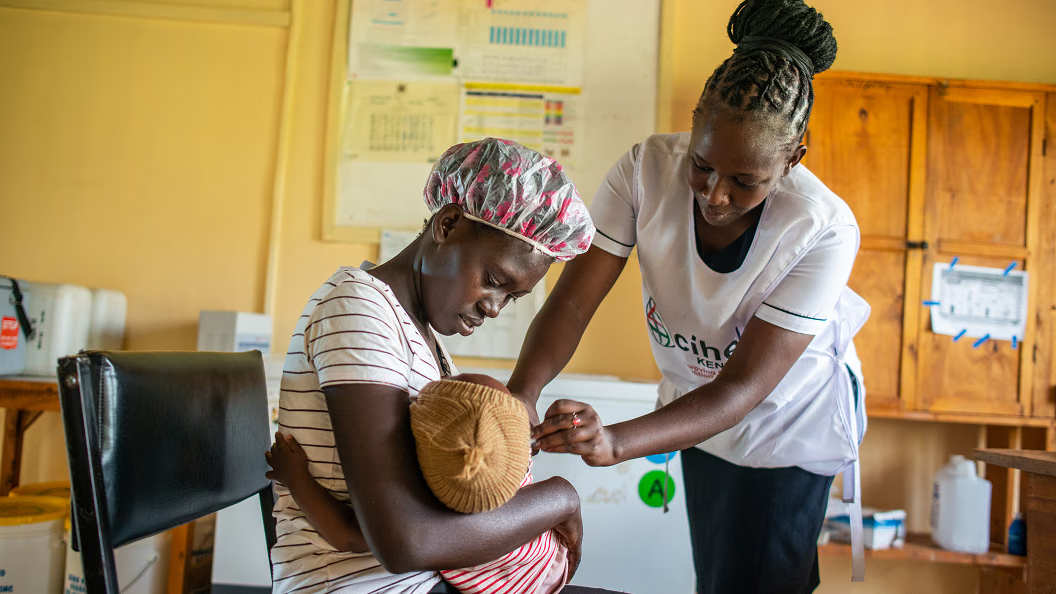
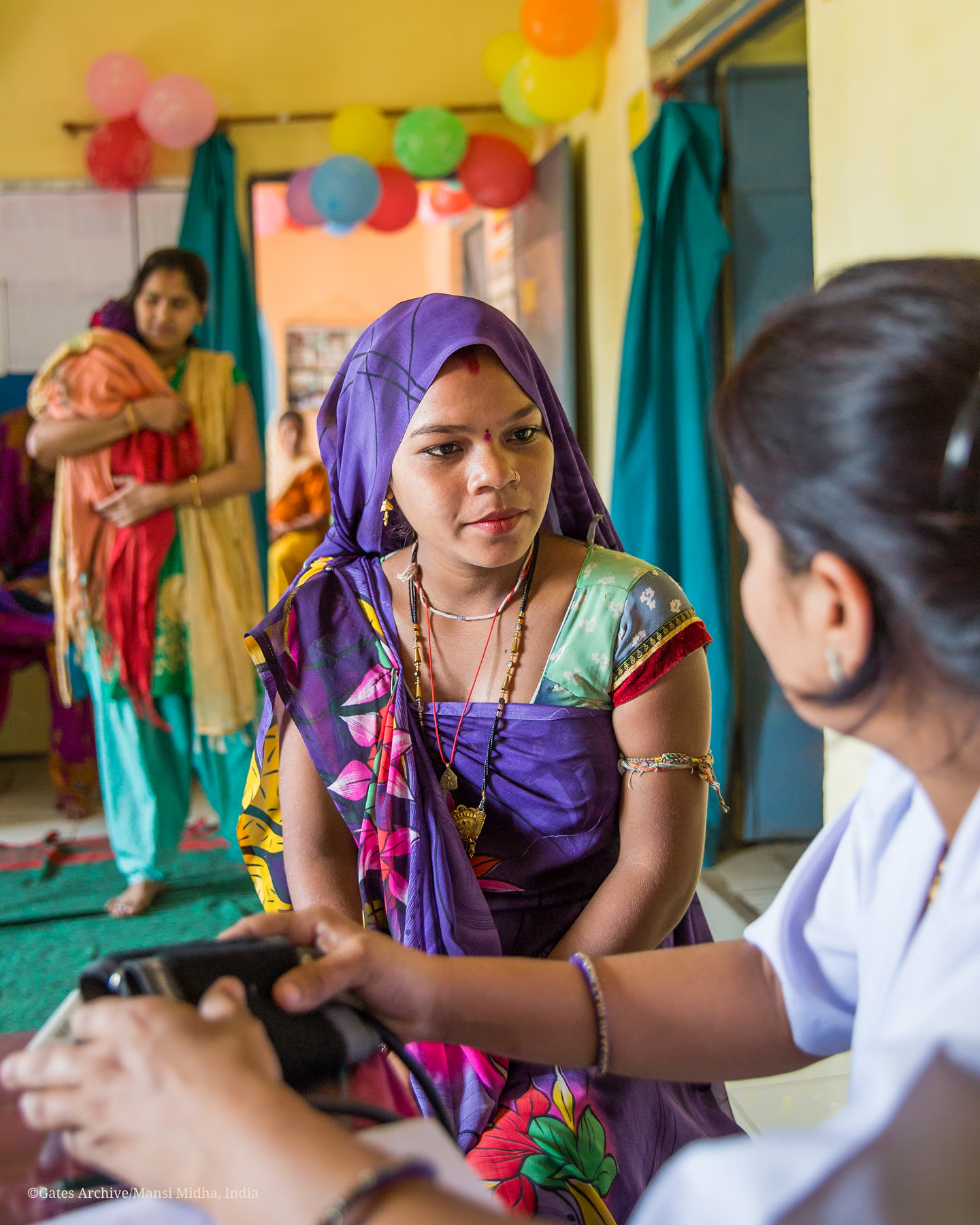
The phone in a health worker’s hand could help her recognize a dangerous pattern, know when to refer a patient, and anticipate which medicines her patients will need before they run out. It could connect what she sees on an individual level with the total knowledge of the wider health system. And it could help her bring better care to more people, even in places that are hard to reach.
Healthcare is only one example of how AI could improve lives. I believe AI could also have a massive positive influence on the education and economic opportunities available to people all over the world, regardless of whether they live in a wealthy district or low-income community.
My whole life, I’ve been focused on how innovation can expand opportunity.
I remember the start of the personal computing revolution: a time when technology became more powerful and affordable, opening up new ways to improve lives around the world.
I’ve lived through waves of change that felt, in the moment, like the most significant thing happening on earth.
Nothing has felt like this.
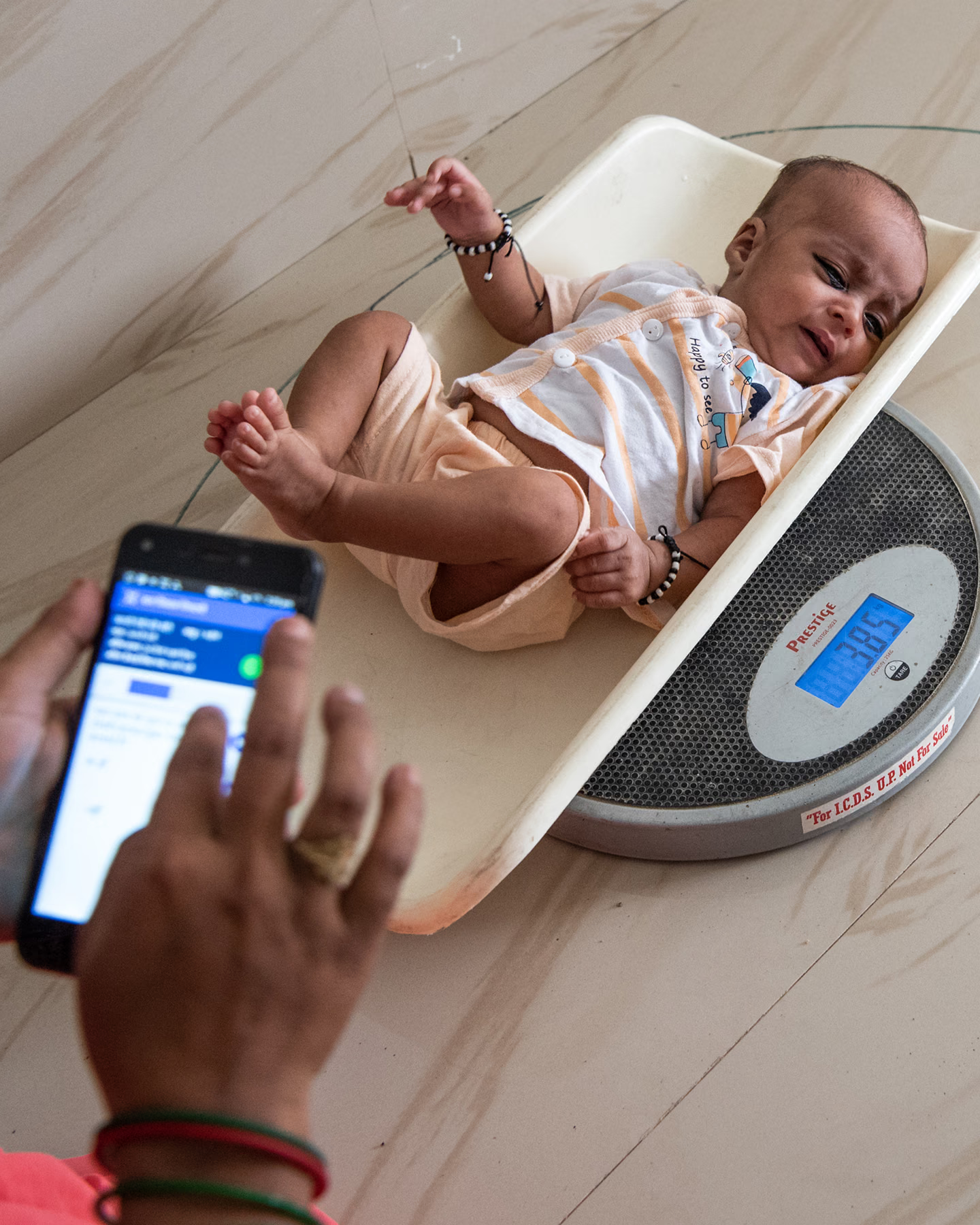
AI is different: a technology moving faster, reaching more people than anything before it. Because of that, no one knows exactly what the future will look like even five or ten years from now, including me.
Some people have never been more worried. Others have never been so excited. I understand where both are coming from.
I’ve written separately about the risks that AI poses—to jobs, to security, and to our institutions. Those risks are real and deserve serious attention.
Here, I want to focus on something that often gets lost: the possibility that AI, if shaped well, could expand who has access to solutions, opportunities, and knowledge that has too often been out of reach.
AI could be a great equalizer—or widen the gap. This is not a long-range prediction. It’s a present-tense choice. Here’s what’s at stake.
AI is different: a technology moving faster, reaching more people, than anything before it.




Where theinequitiespersist
We’ve made extraordinary progress. But on current trends, the gaps between rich and poor don’t close—they persist for decades.
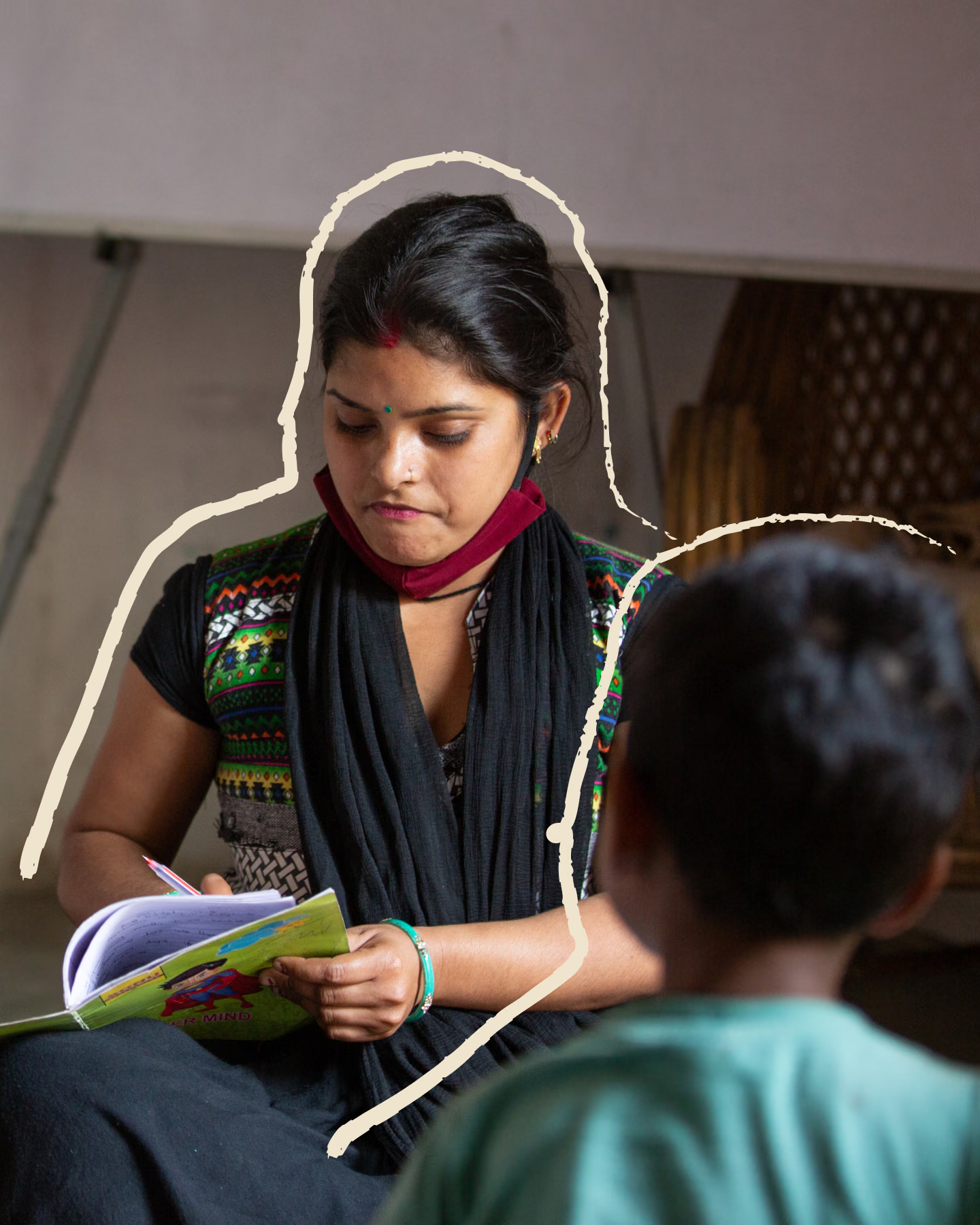
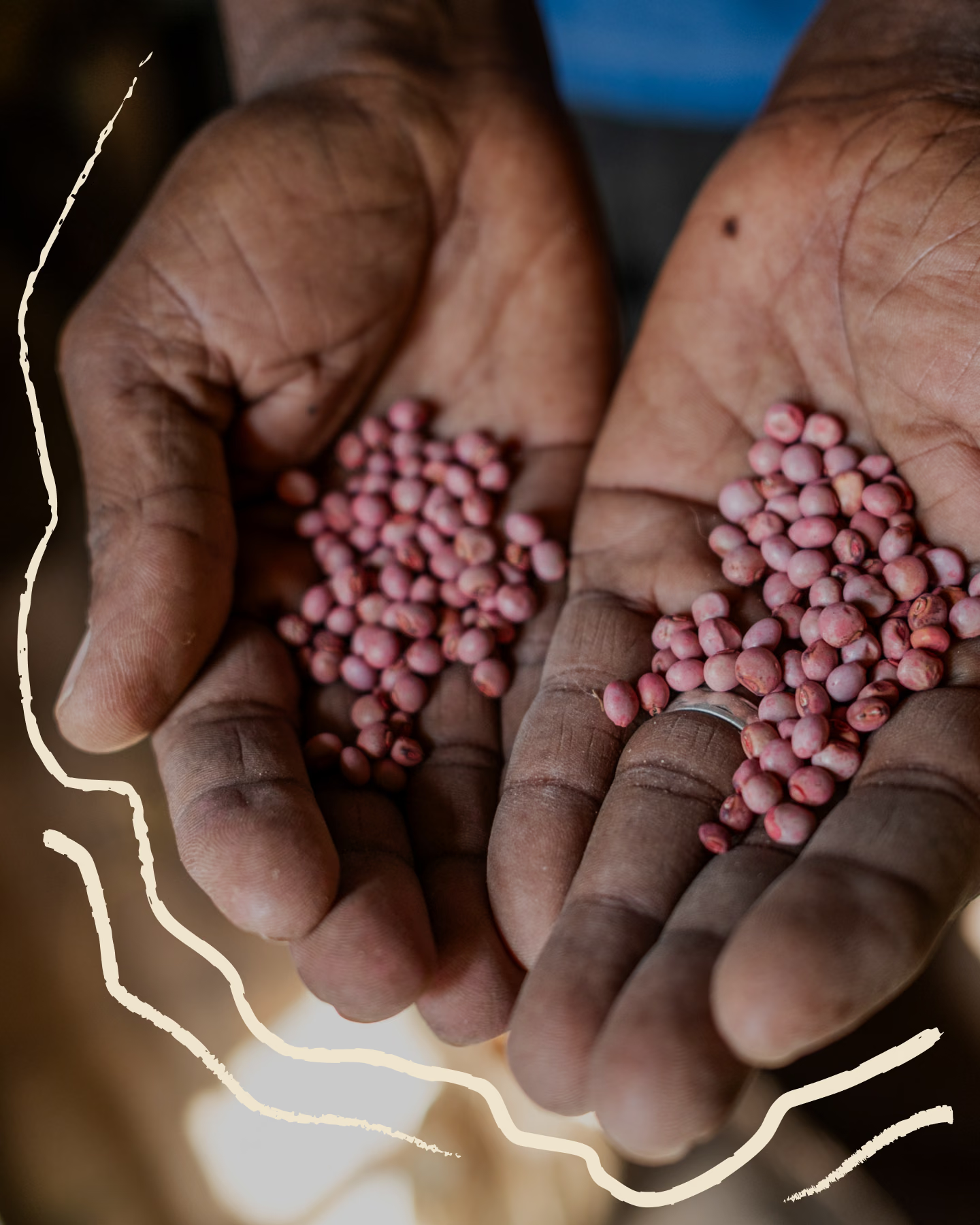
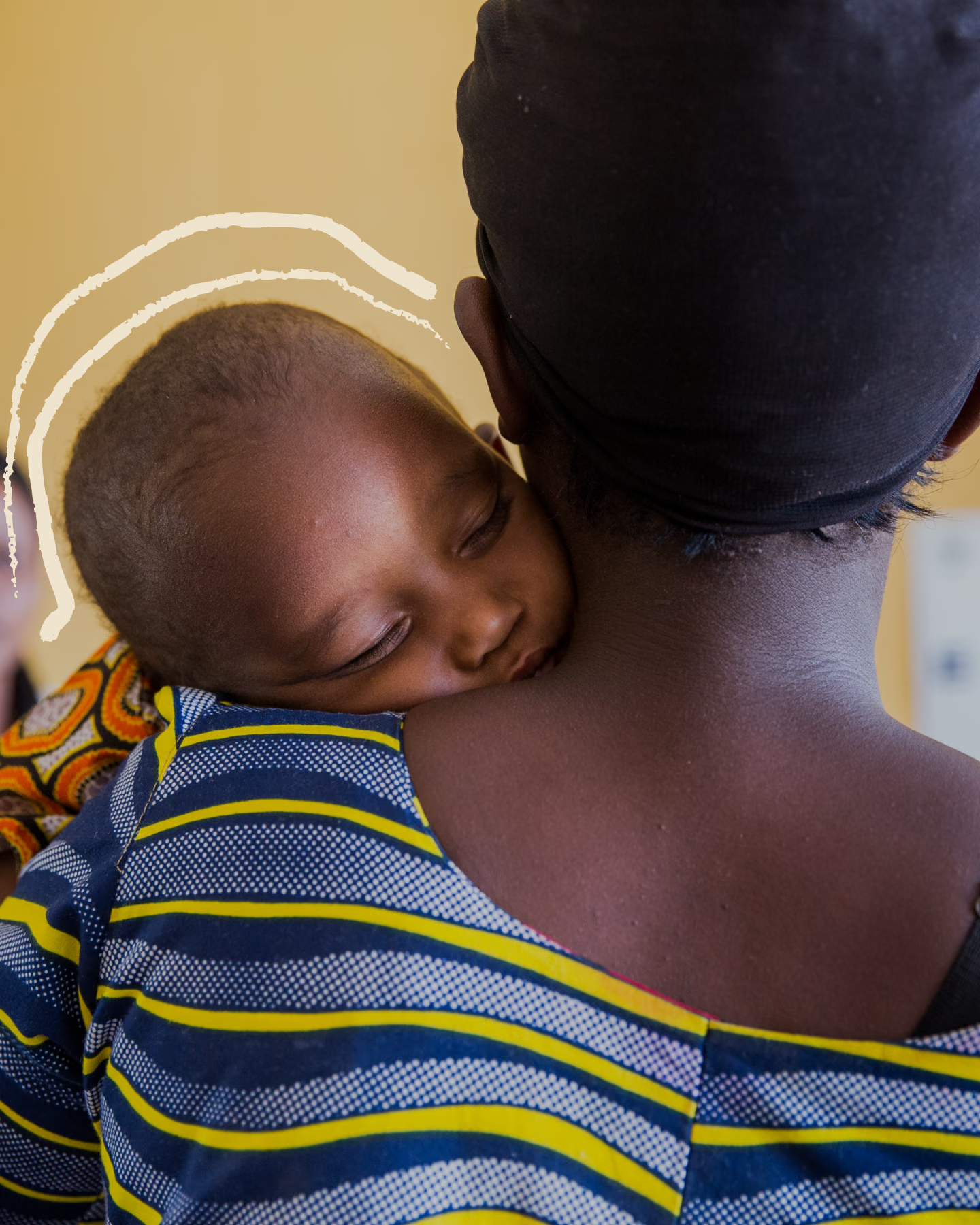
We’ve made progress. But if current trends persist, so does inequality.
The last 25 years have shown what is possible when innovation is deliberately put to work for the people who need it most. Since the start of the 21st century, child deaths have been cut in half. Extreme poverty has declined. Deaths from HIV, tuberculosis, and malaria have fallen significantly.
These gains did not happen by accident. They happened because the world invested in innovators, frontline heroes, and tools that save lives—and made sure they reached the people who needed them.
But that progress is fragile. In some places, it has already slowed, made worse by devastating cuts to funding for global health in recent years. Even still, by 2045, the world should be, on average, better educated, healthier, and less poor than it is today.
But averages hide the full story.
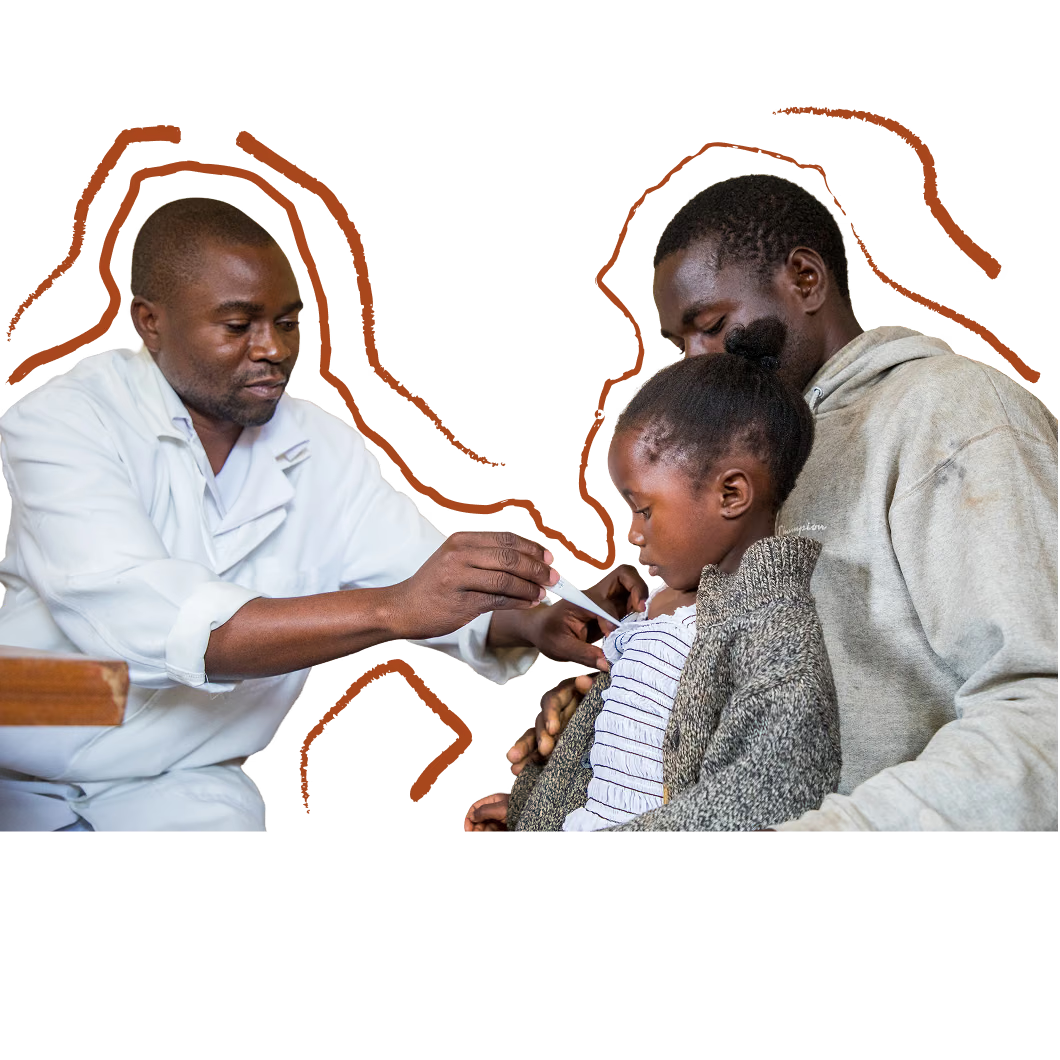
New data from the Institute for Health Metrics and Evaluation at the University of Washington shows health and opportunity gaps between the richest and poorest people will stay stubbornly wide unless something changes dramatically.
For example, in 2045, a young adult in sub-Saharan Africa is projected to still have three fewer years of schooling than their peers in high-income countries. That’s big progress from where things stood 25 years ago—but it’s still a gap that shouldn’t exist.
Nearly 900 million people will still be living in extreme poverty—low-income countries will have 330 times more people living in extreme poverty than high-income countries.
And more than 3 million children will still die each year from diseases we already know how to prevent today.
The Schooling gap won’t close itself
Years of Schooling
high-income vs. low-income countries, 2000–2045
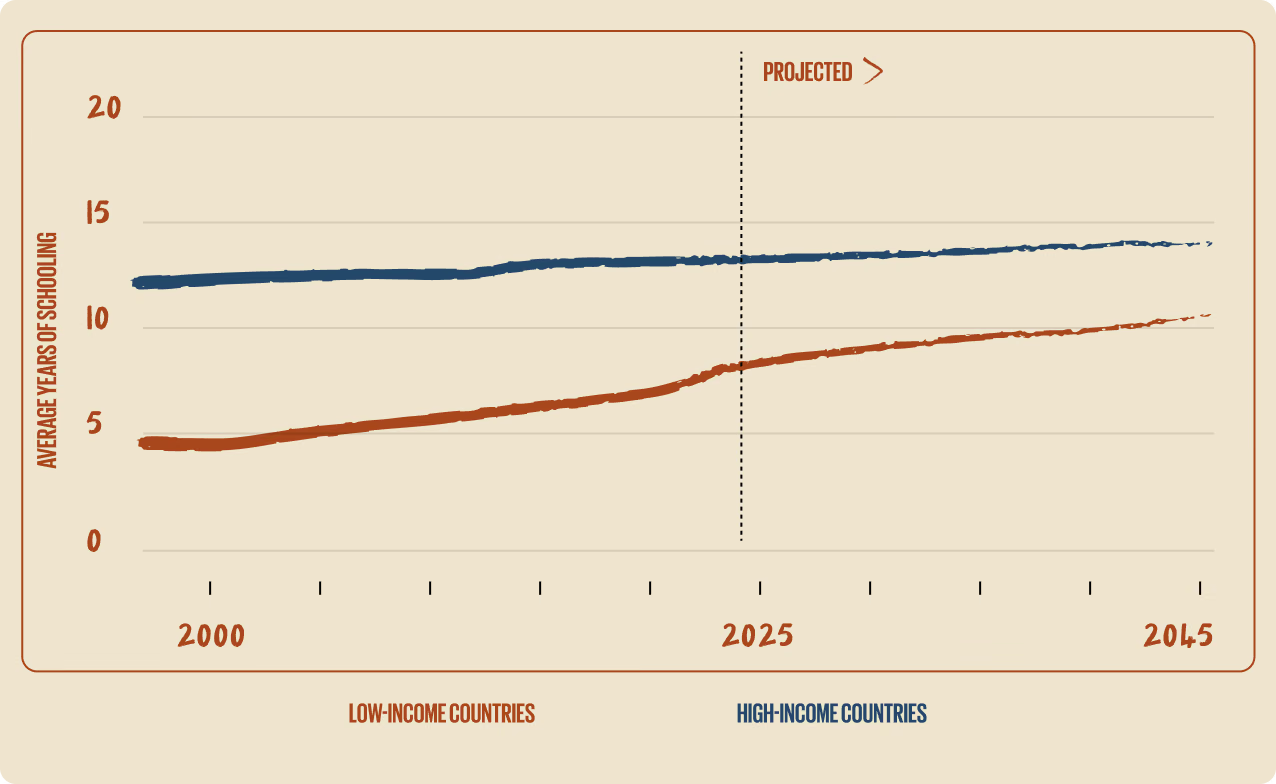
Still 3 years behind in 2045

11
years
of education in sub-Saharan Africa

14
years
of education in high-income countries

Poverty is shifting, not shrinking
People living in extreme poverty by region
2000–2045 (millions)
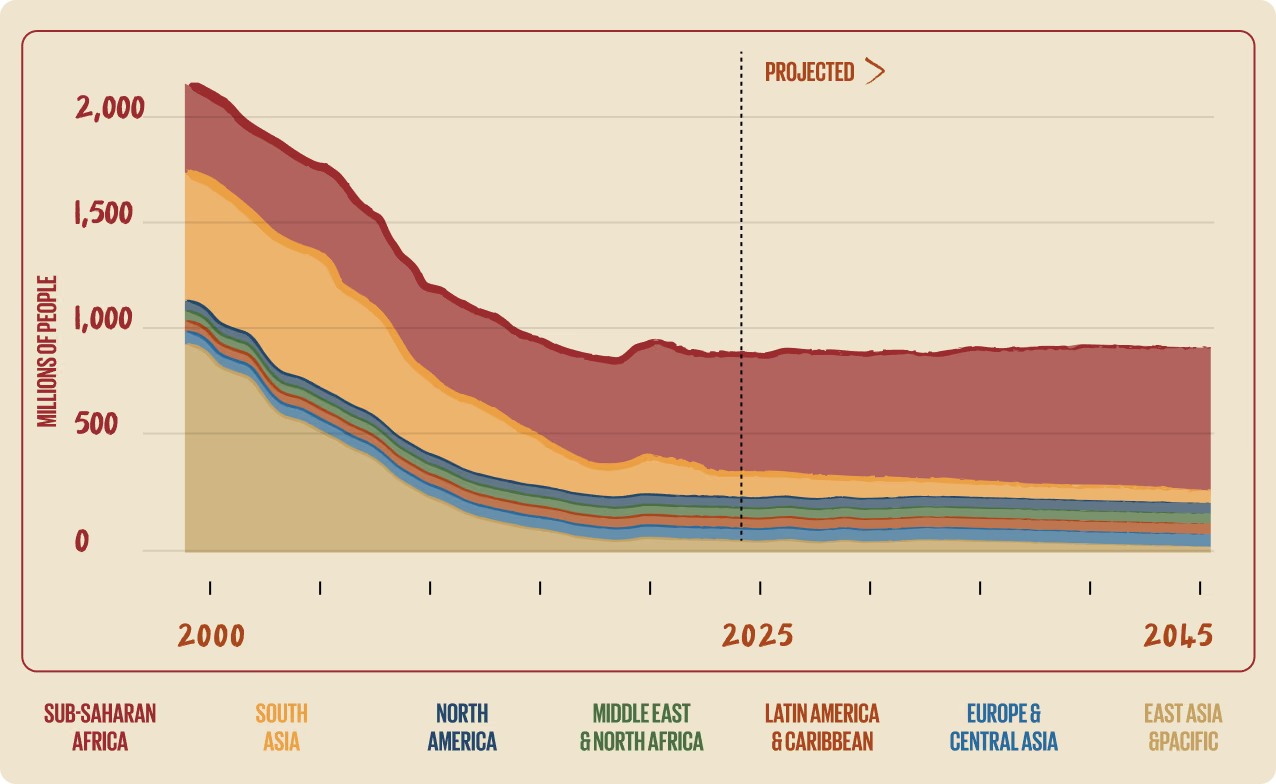
900m
living on <$3/day in 2045


330x more likely to be living in low-income countries
Children are still dying from preventable causes
Under-5 child deaths
2000–2045 (millions)
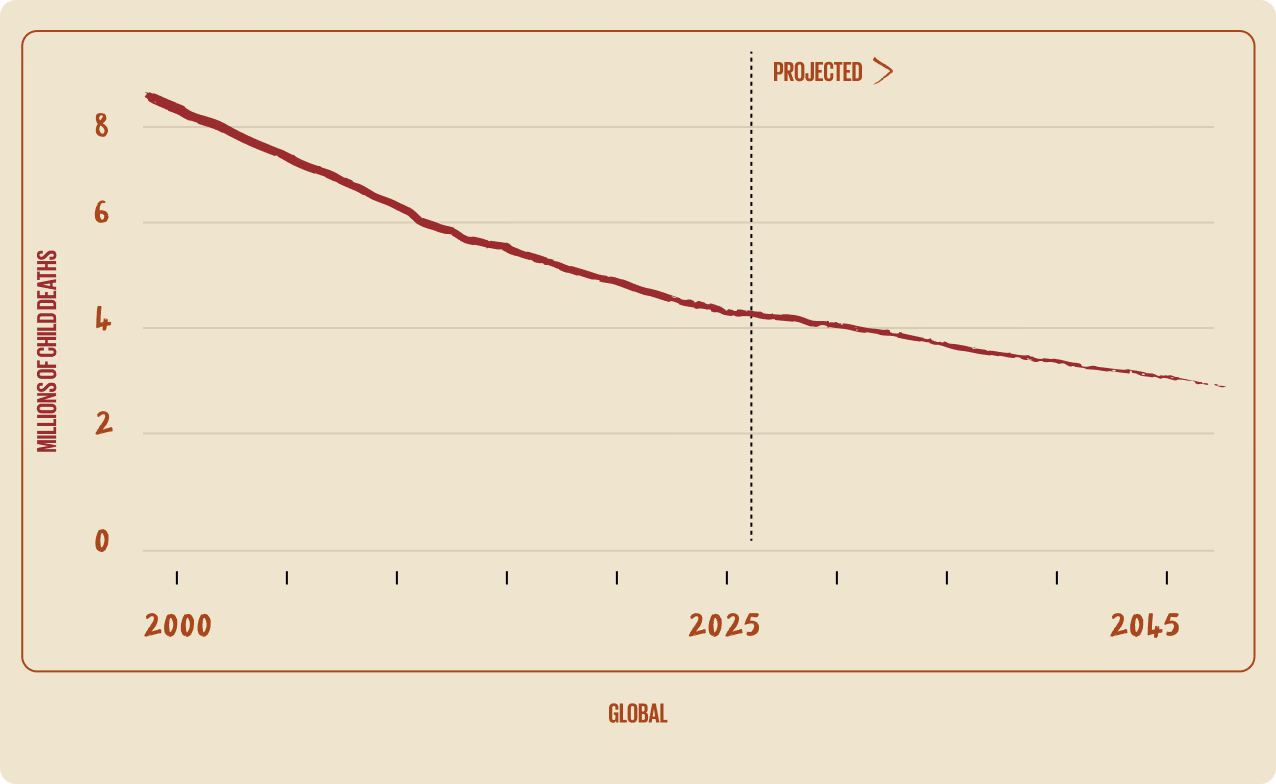
3
million
children < age of 5
will still die each year from diseases we already know how to prevent.
Behind each of these data points is a make-or-break moment for a family: a diagnosis made or missed, a harvest saved or lost, a child who learns to read or doesn’t. AI is arriving at a moment when conflict is growing, diseases are surging, and resources are constrained.
This is why I care about AI. Not because it can write a beautiful line of code or plan your vacation for you, but because it can help a student get unstuck before they fall behind. It can help a farmer save their crop before it fails. And it can help parents get answers about their child’s lingering fever—before it becomes a life-threatening emergency.
Of course, healthcare workers, farmers, and teachers should continue to bring their unique judgment, creativity, and care to their work. But designed well, AI can give them more support, helping knowledge travel farther, faster.
Health and opportunity gaps between the richest and poorest people will stay stubbornly wide unless something changes dramatically.
Left to the market, AI will be designed by and for the richest people in the world.
I believe that the decisions made in the next 12 to 18 months—about how AI is built, funded, and deployed—will determine whether this technology primarily benefits the people who already have the most or reaches those who have the least.
We can harness AI for good. But it won’t happen by accident. After all, the market is an extraordinary engine of innovation, but a terrible guarantor of equal opportunity.
The Gates Foundation was created in part to address a basic market failure: the people with the greatest needs often have the least power to shape where innovation and investment go. For decades, that has meant lifesaving vaccines, medicines, and other tools reaching the world’s poorest communities years later than they reach wealthier ones—if they reach them at all. Much of our work has been about closing that gap.
AI presents the same challenge, only at much greater speed. Left to the market alone, the most capable tools will be built first for the people and institutions most able to pay for them—not necessarily for those who could benefit most.
That is how inequity compounds: the technology that makes life easier, increases productivity, and sometimes even saves lives arrives first for people who already have the most.
With AI, the gap could grow even faster. AI is spreading more quickly than earlier waves of computing. With every month that passes, the distance grows. AI models get sharper and more capable for the people already using them, while standing still for everyone else.
That is what makes this moment so urgent. Things are changing rapidly, and the window to shape who benefits from AI, and how soon, is short.
The good news? Making AI useful for the people and places where it could make the biggest difference is not an evolutionary leap. It’s within reach.
But it requires a deliberate, specific commitment from government leaders and the companies developing the technology: to measure success not only by what AI can do for the most profitable users but by what it can do for the people who stand the most to gain.
Where thedifferencegets made
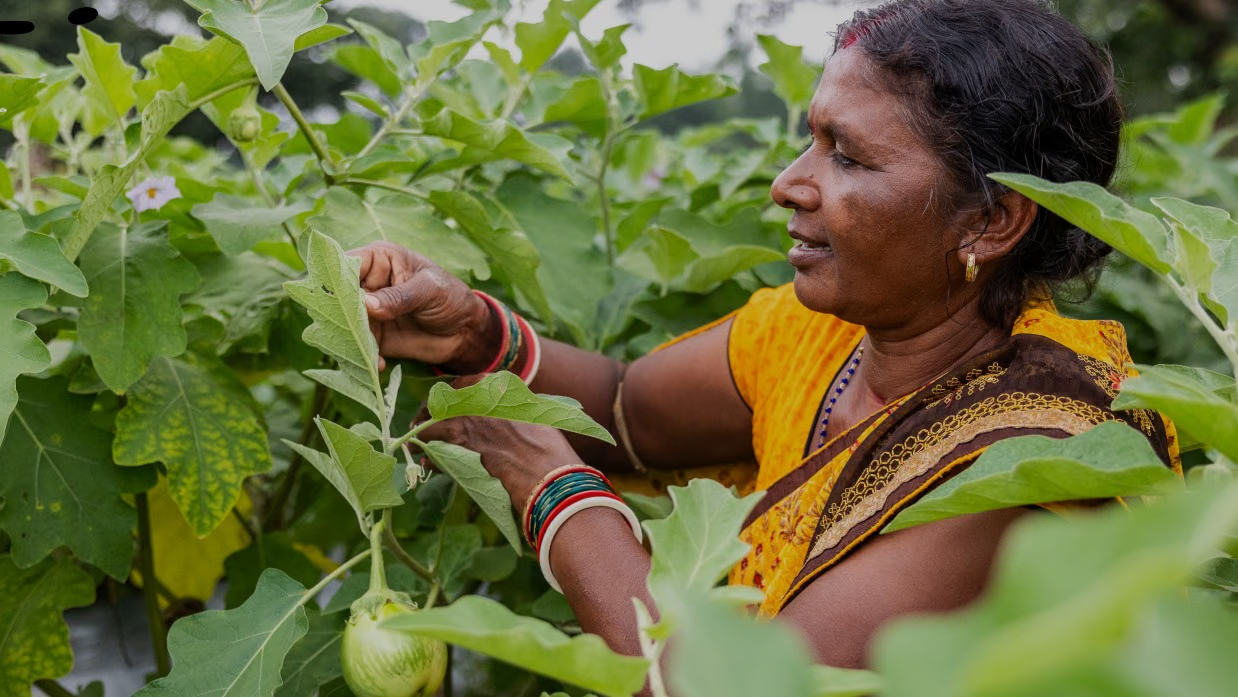
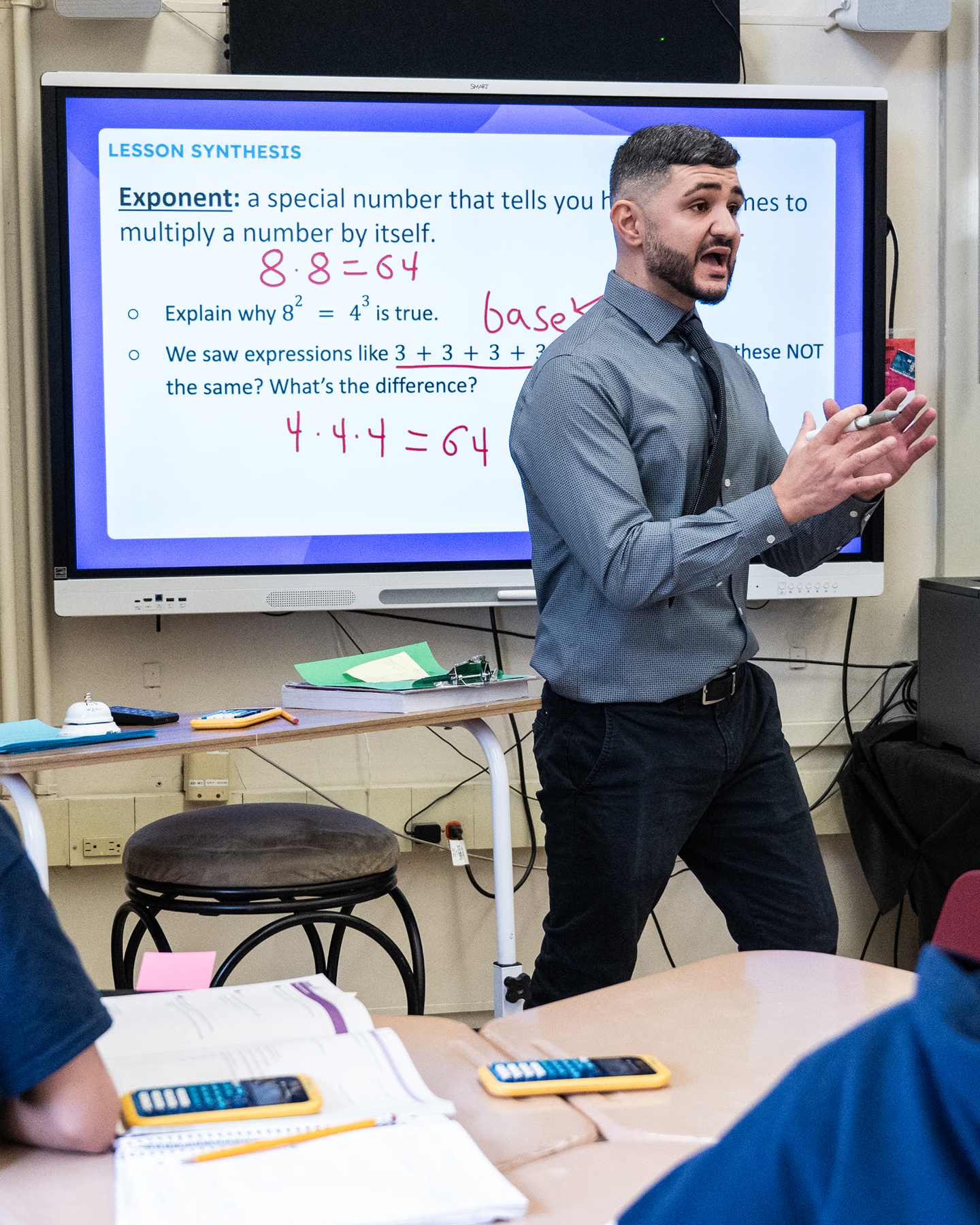
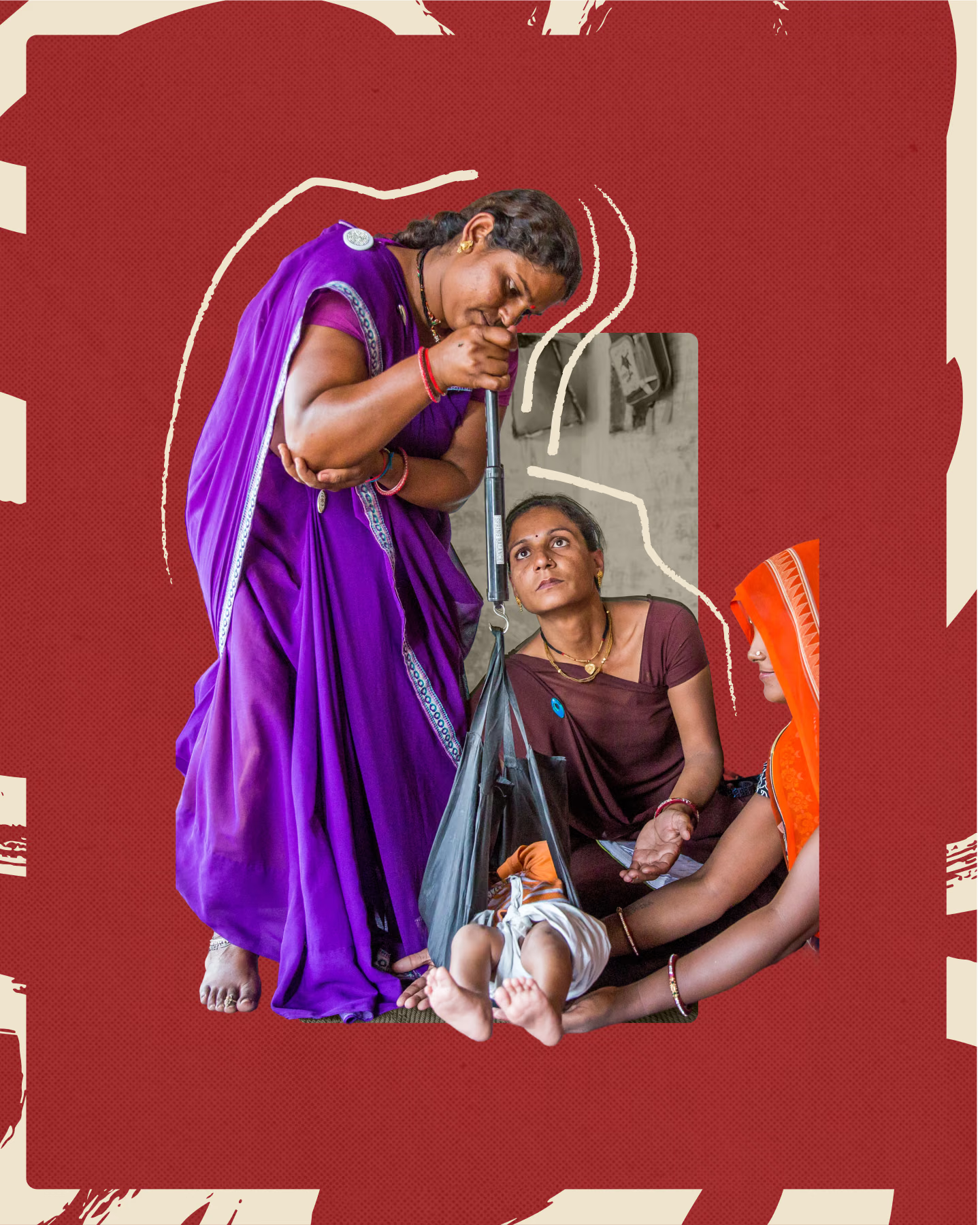
There are only so many doctors, teachers, and farmers' advisors in the world. AI could give each of them the support to do more.
We need to reach the people who have the most to gain from AI.
Today, many of the most promising AI tools are still in pilot mode. They need to work in all languages, on ordinary phones, and in the places where people make real-life decisions before they can be trusted to take to scale. But the distance between pilot mode and scale could be much shorter than it was for earlier technologies—because if done well, AI can reach people through natural conversation, on a device already in their pocket. That means the choices being made now—by AI labs, governments, philanthropies, and local leaders—matter enormously.
Within three years, if we make the right choices, the most promising AI tools will be broadly deployed where they can make the biggest difference on most people’s lives and livelihoods in health, agriculture, and education.
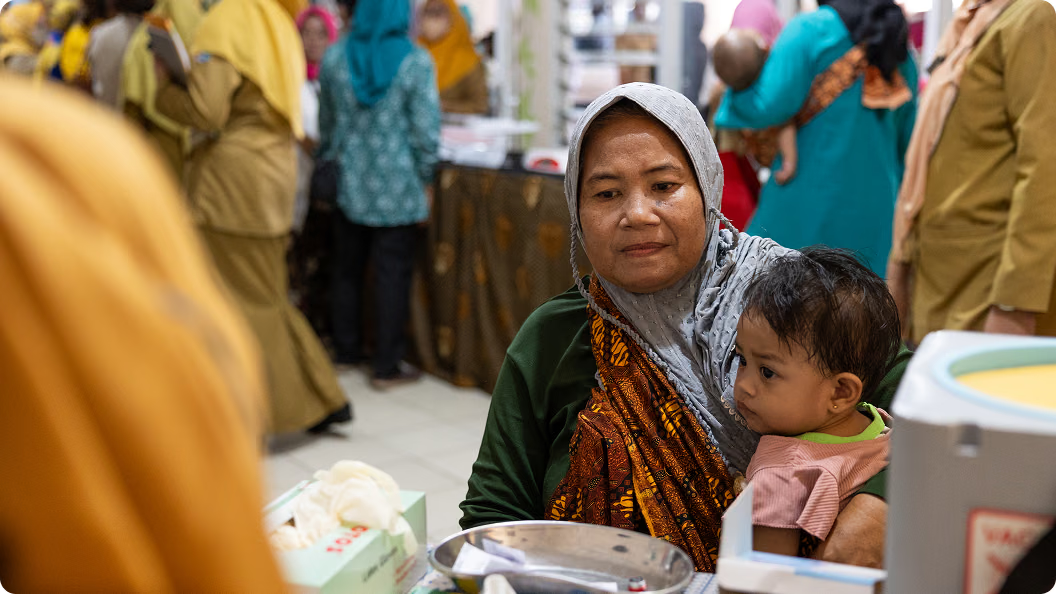
Across these critical issues, people in the most remote, lowest resource settings should have access to the best possible guidance at the same time as people with the most resources. To get there, AI will need to be affordable and will have to earn people’s trust by protecting their privacy and working in their specific contexts.
That will require significant commitment from AI companies, governments, philanthropists, and many others. The Gates Foundation is ready to do our part. In fact, we’re already working with others to ensure the potential benefits of this technology reach everyone.
Where the difference gets made: A nurse, a farmer, a teacher
The next two decades can be a period of extraordinary progress for millions of people.
But ensuring more moms and babies survive childbirth and childhood, more families grow their incomes, and more students achieve their goals will require more than new technology. It will require getting the right knowledge to more people at the moment they need it.
I believe human ingenuity should never be replaced. But there are only so many doctors, teachers, and advisors in the world, and they simply can’t reach everyone who needs support.
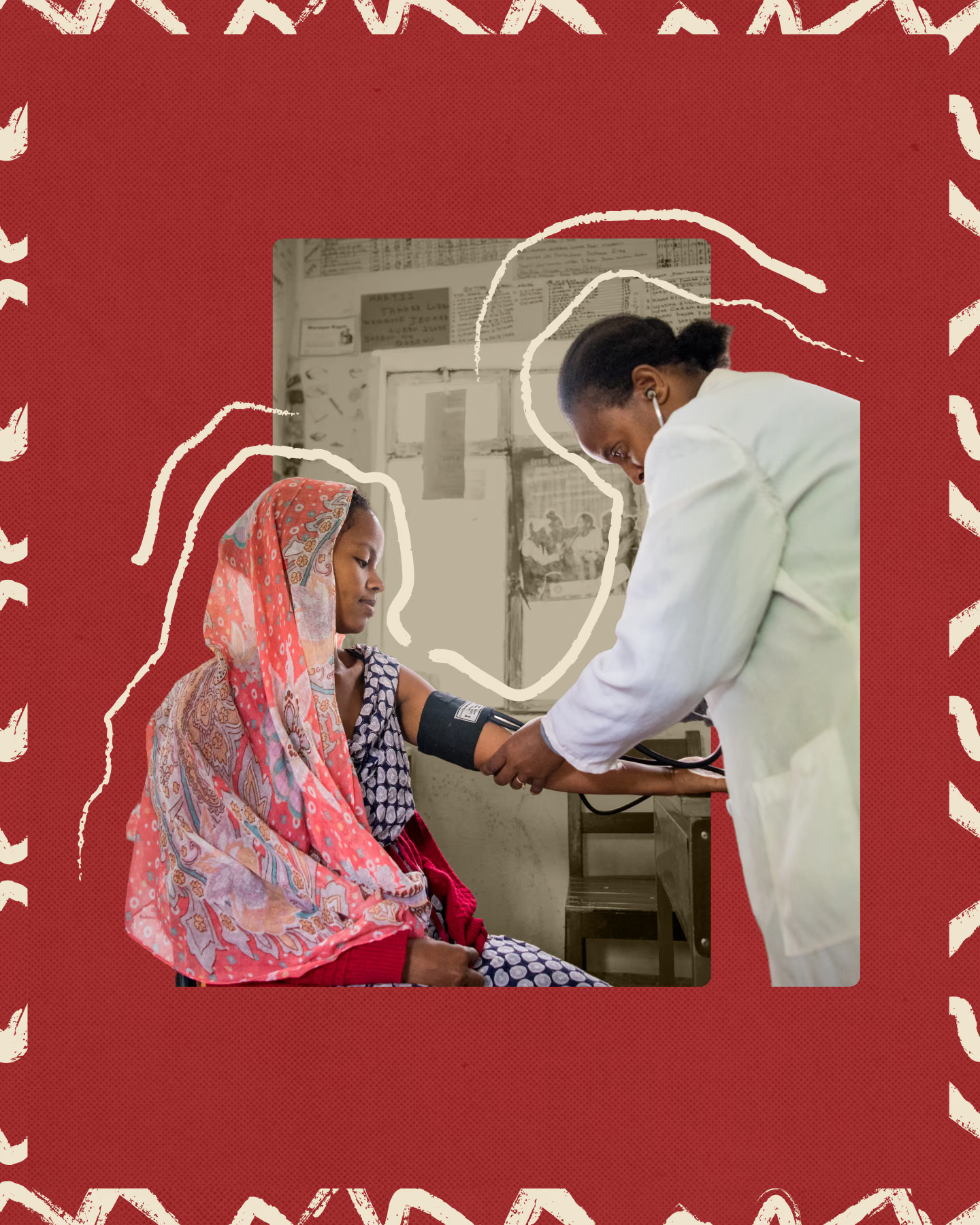
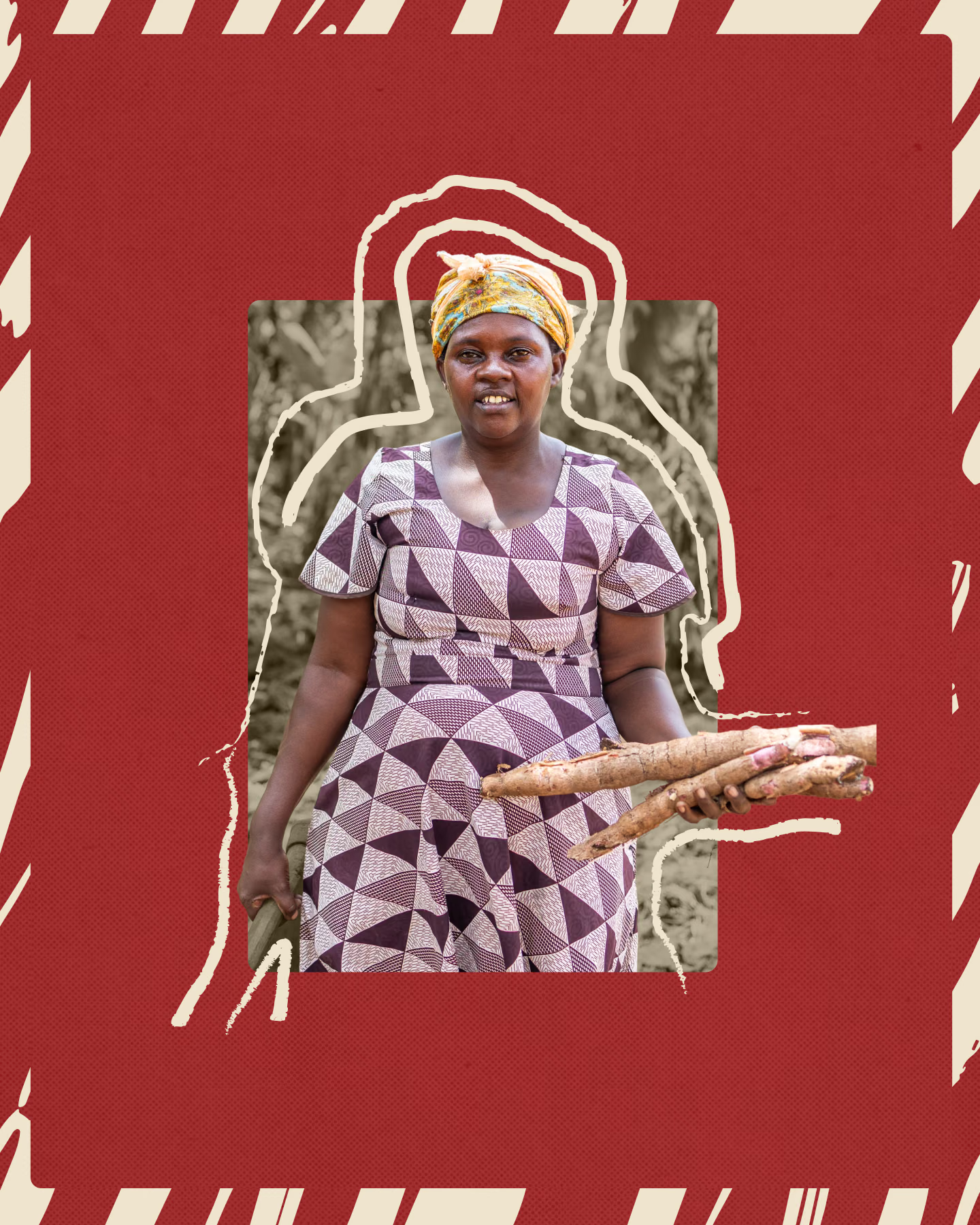

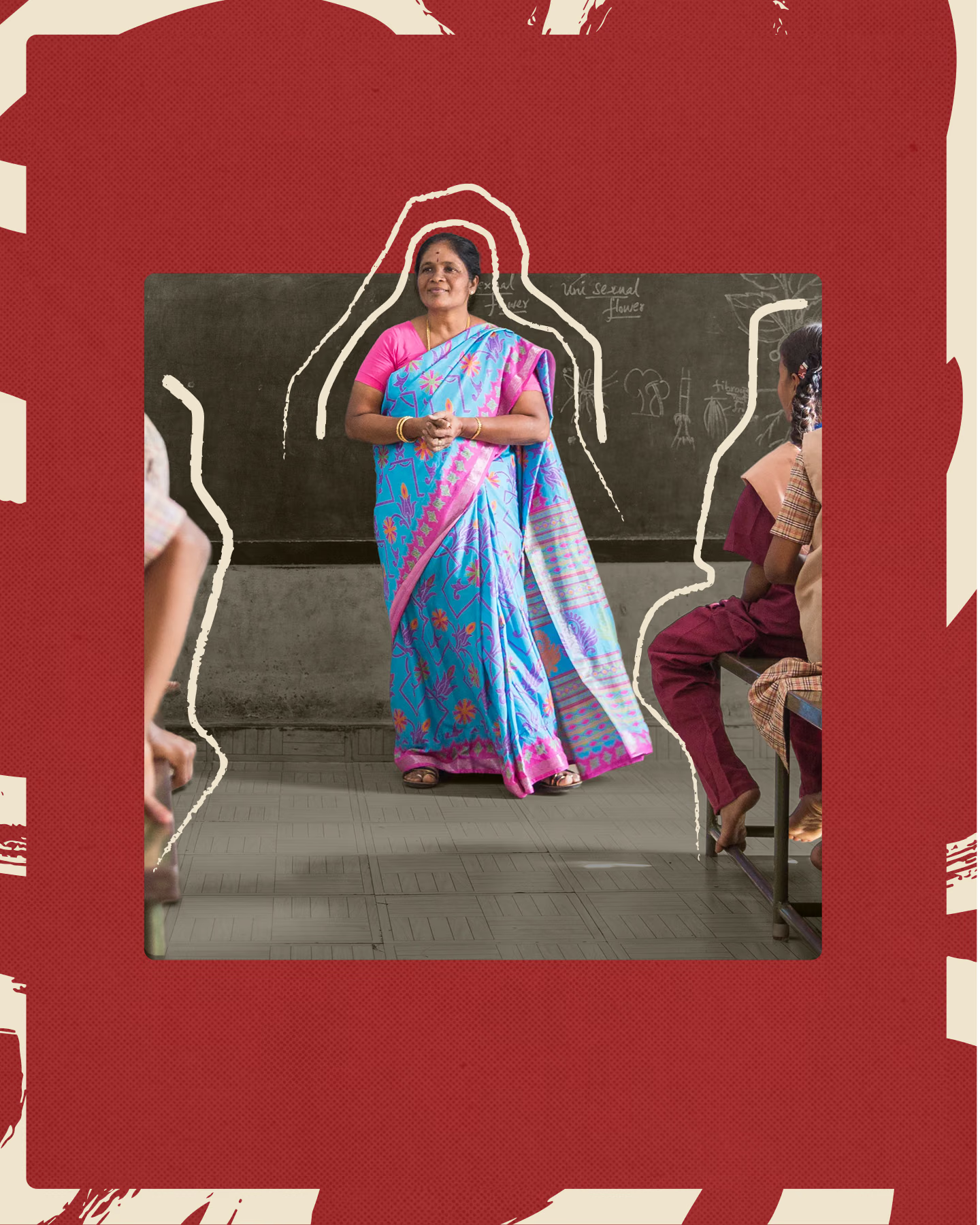
The shortage of doctors and trained health workers in low-income countries is dire.
In sub-Saharan Africa, one doctor cares for roughly 2,000 people. That means a single doctor is often responsible for the health of an entire town. That means many families who need urgent help have to wait, or don’t get care at all. In high-income countries, each doctor cares for fewer than 200 people. To come close to that amount of access in Sub-Saharan Africa, the region would need more than two million additional doctors. That gap will narrow over time—but far too slowly to meet the need that exists right now.
sub-sahara africa
high-income countries
One
Doctor
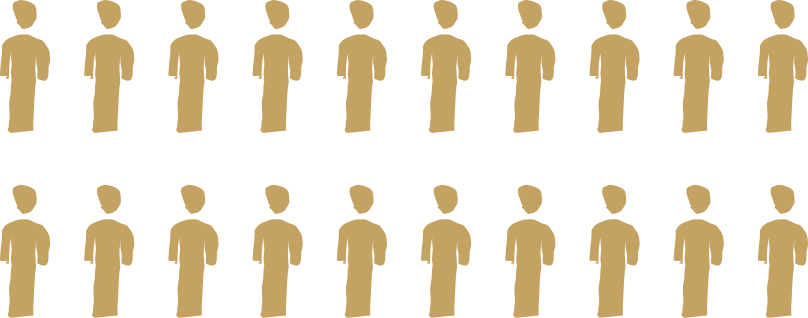
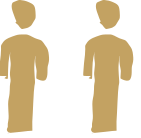
2000
people
*Each person represents 100 people
Training more doctors and health workers is essential. But patients cannot afford to wait. We need to give today’s nurses, community health workers, and other frontline providers the capacity to reach more patients, and give more informed advice based on all the expertise AI can make accessible.
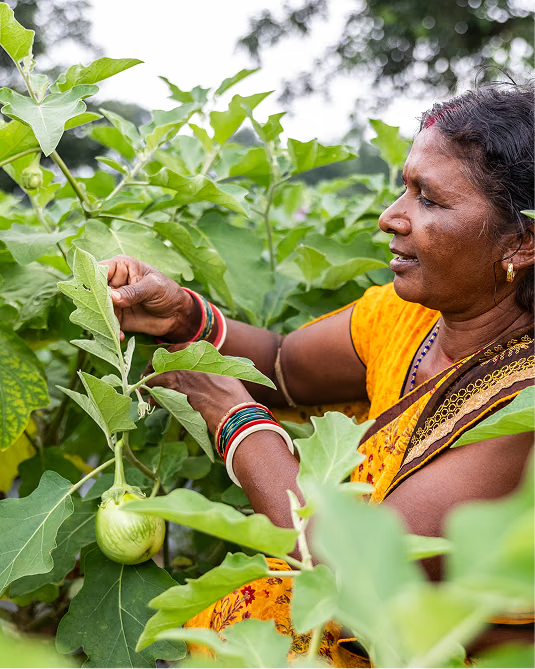
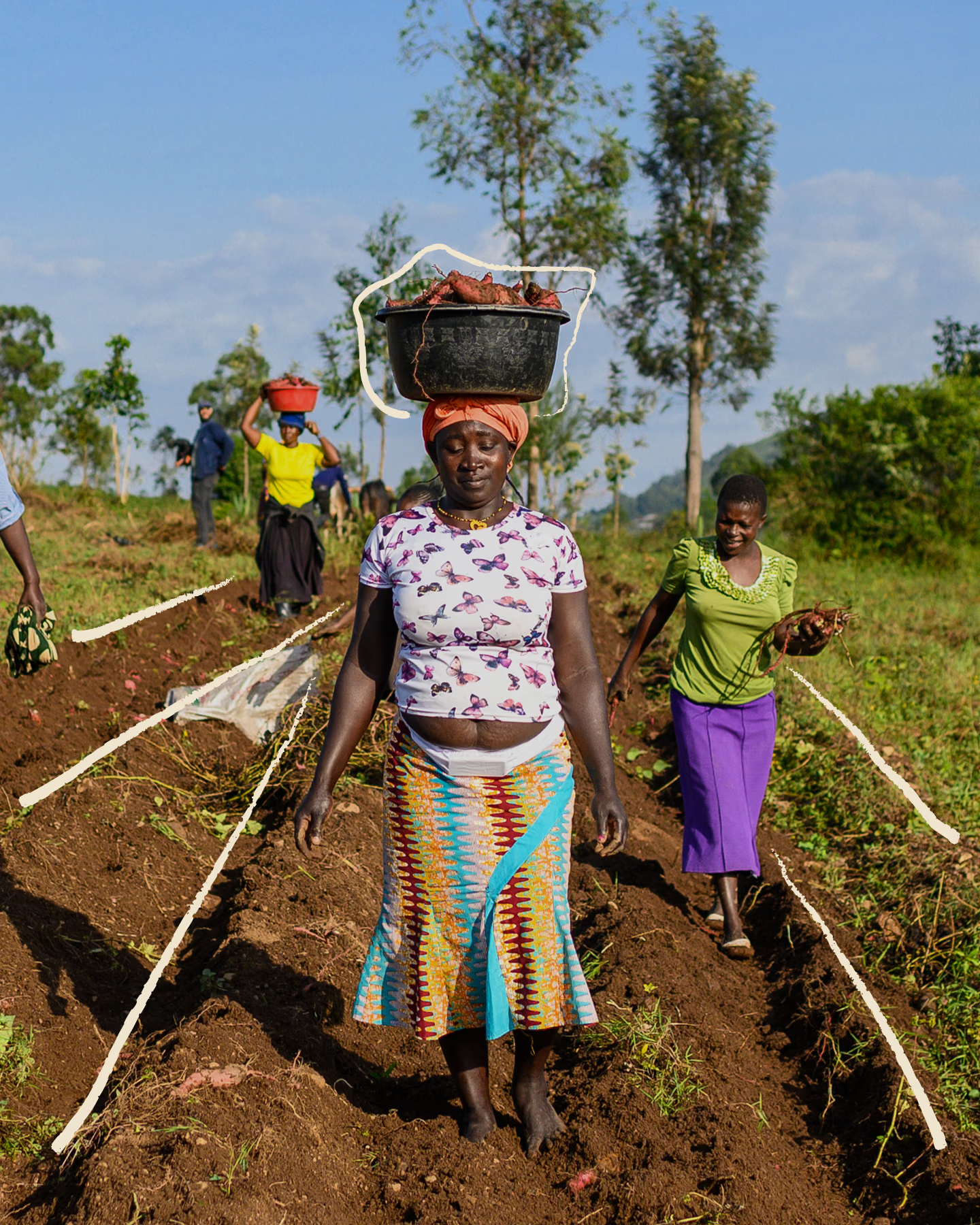
Gaudence Ngendahayo, the community health worker I met in Rwanda, is also a farmer. That’s not unusual. In many communities, the people delivering basic health care are also earning a living, feeding their families, and taking care of everything else life demands.
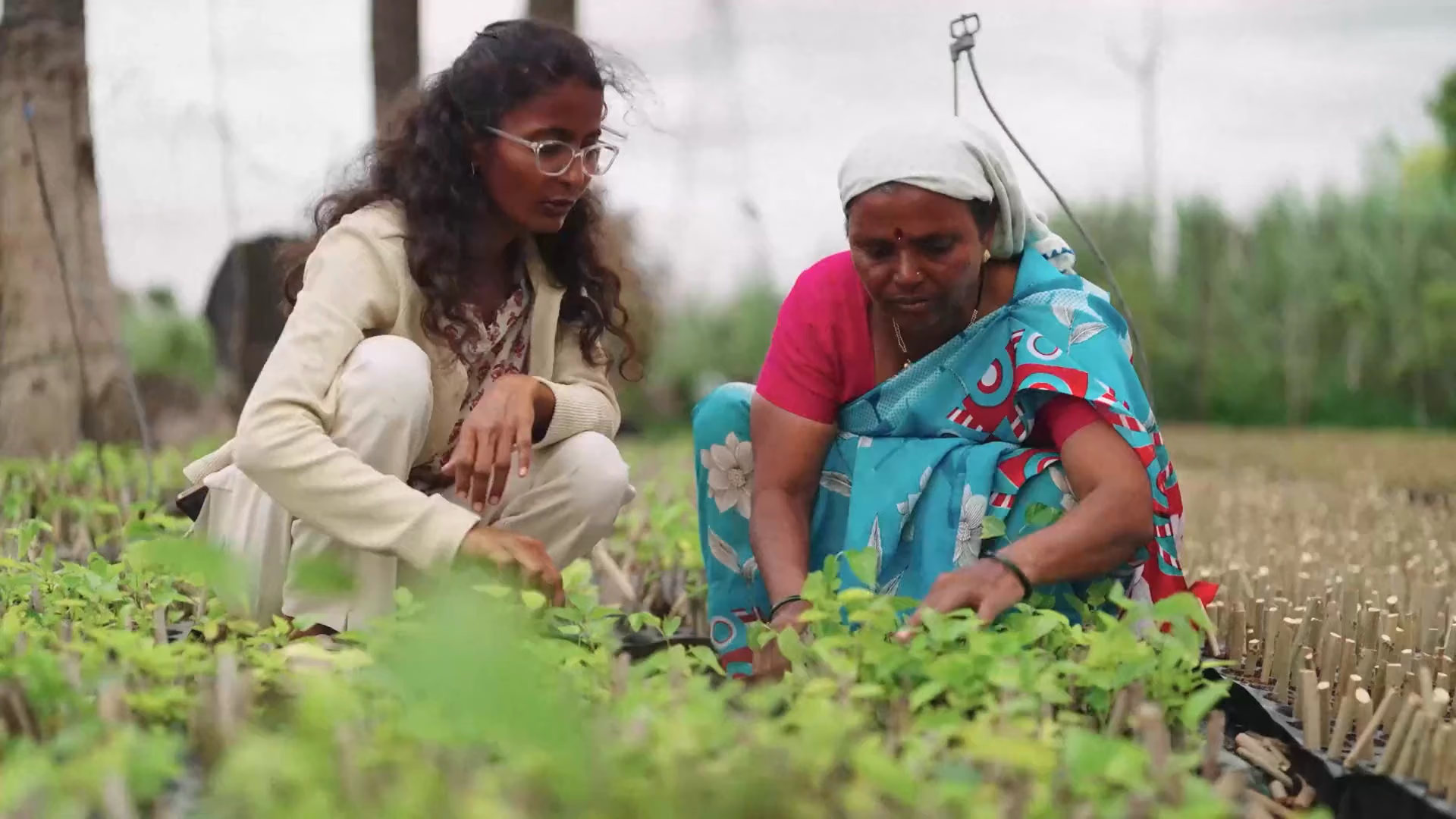
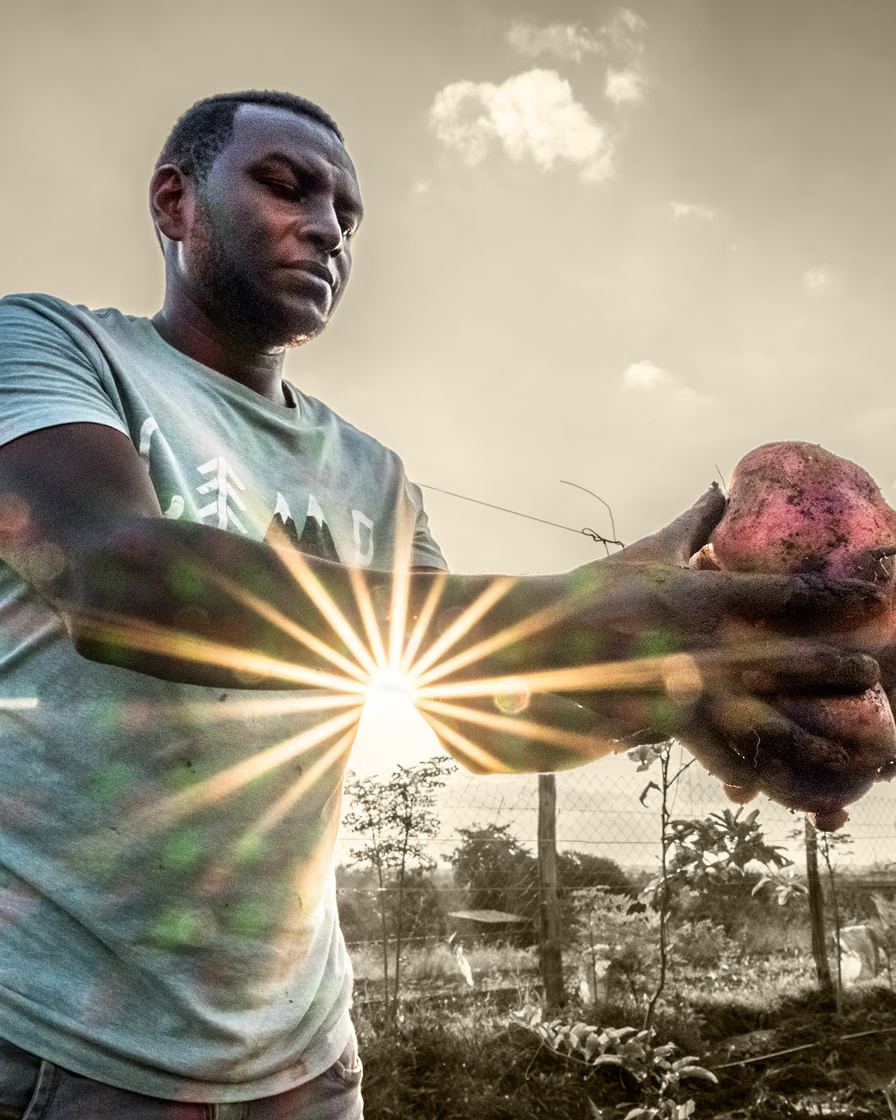
Each day, farmers like her make dozens of seemingly small decisions. What to plant, when to plant it, and where? How much seed to buy? Whether to irrigate, how to respond to a pest, when to harvest, and when to take a risk and do things differently?
For many of the world’s farmers, especially those with small plots of land, getting those decisions right can mean the difference between a good harvest and a lost season.
But getting them wrong does not just cost a crop. It can cost a family its income, its food supply, and its savings.
And yet, in much of the world, when a farmer is facing a failing crop, a persistent pest, or weather that is more extreme than it used to be, there’s simply no one to call for advice. That’s not just a problem for their family; it’s a problem for everyone who relies on them for food.
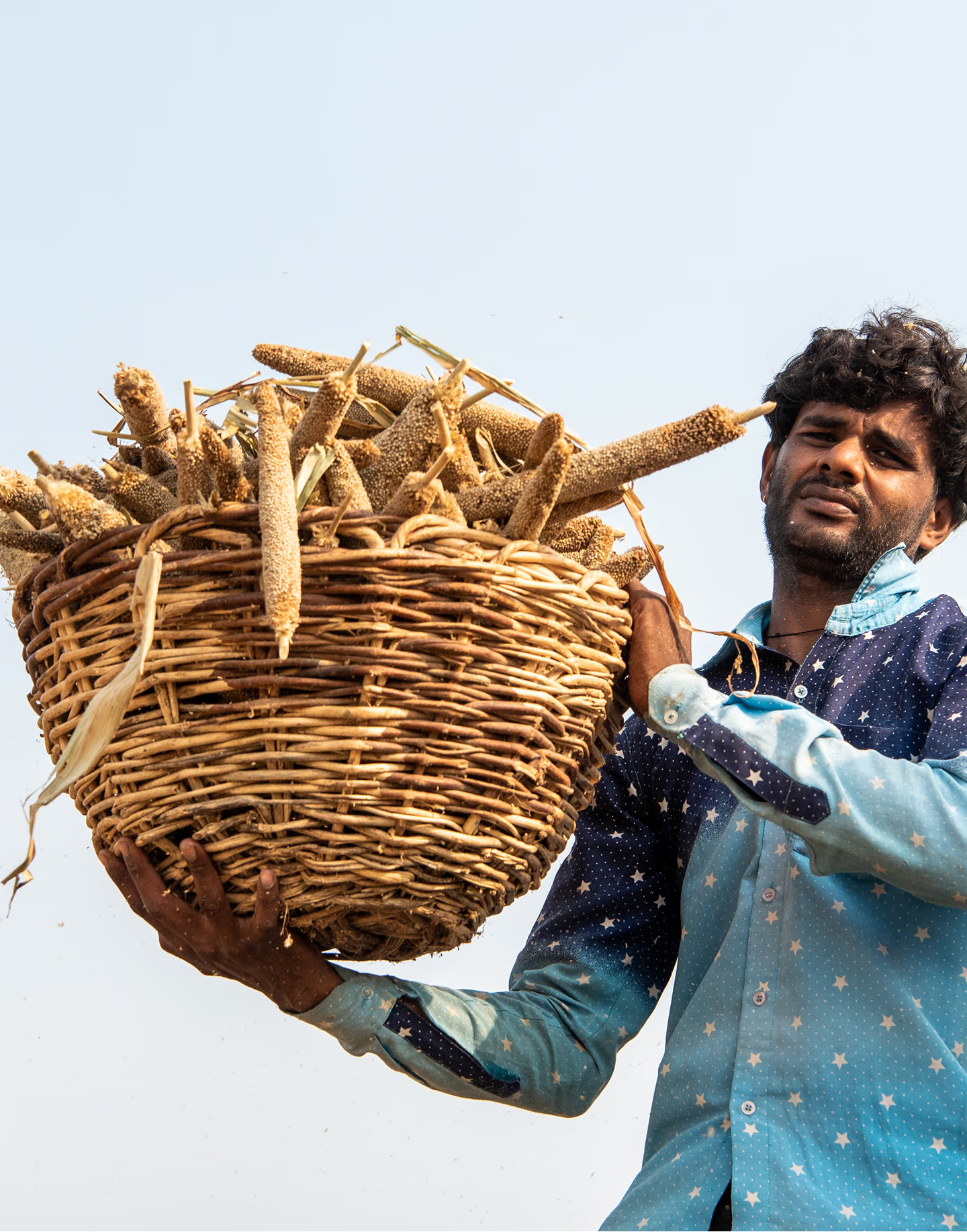
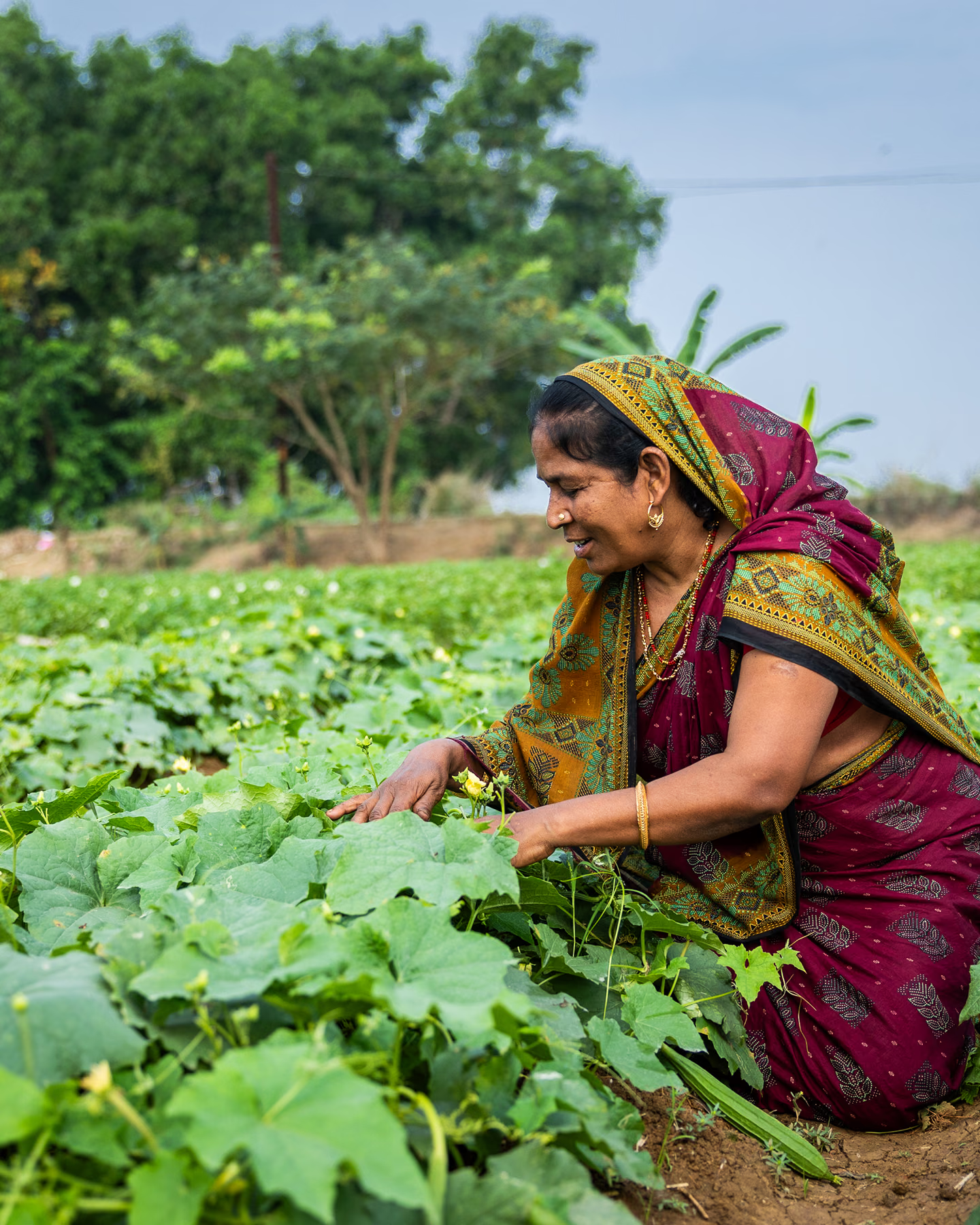
Earlier this year, on a farm in Andhra Pradesh, India, I watched a farmer named Annapurna Devi take a picture of a diseased banana leaf with her phone. Using an AI tool, she received a diagnosis in her own language, along with a recommendation for how to treat the pest attack. Annapurna ordered a drone via the application to spray the recommended pesticide, which was deployed to her fields within 48 hours.
The technology was impressive. But what mattered most was much simpler: Annapurna needed to know whether she was going to lose her crop. The AI tool gave her the answer in time so she could save it.
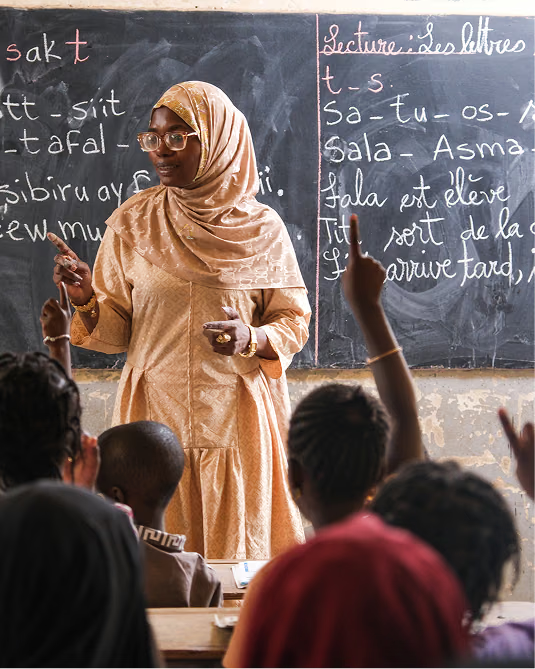
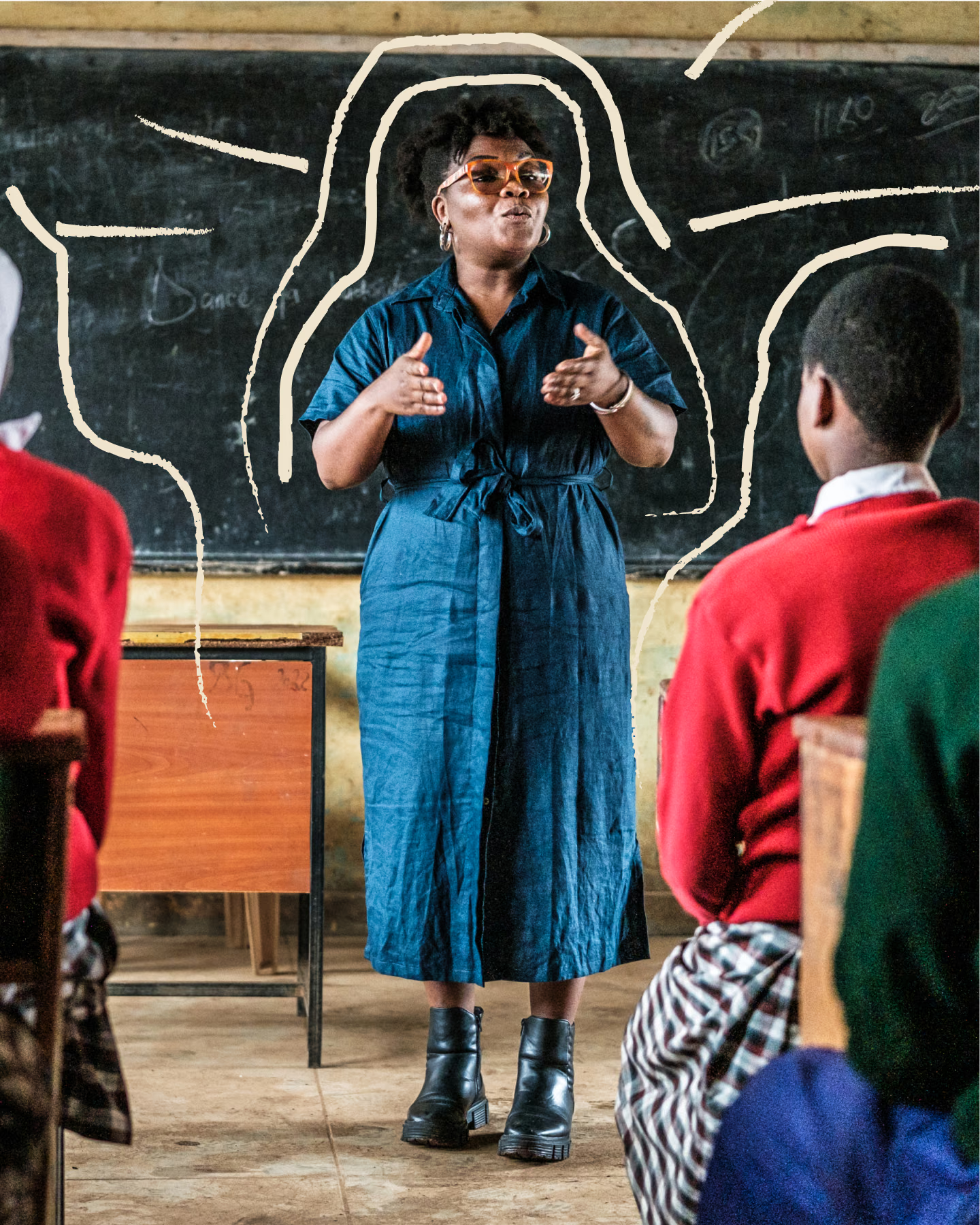
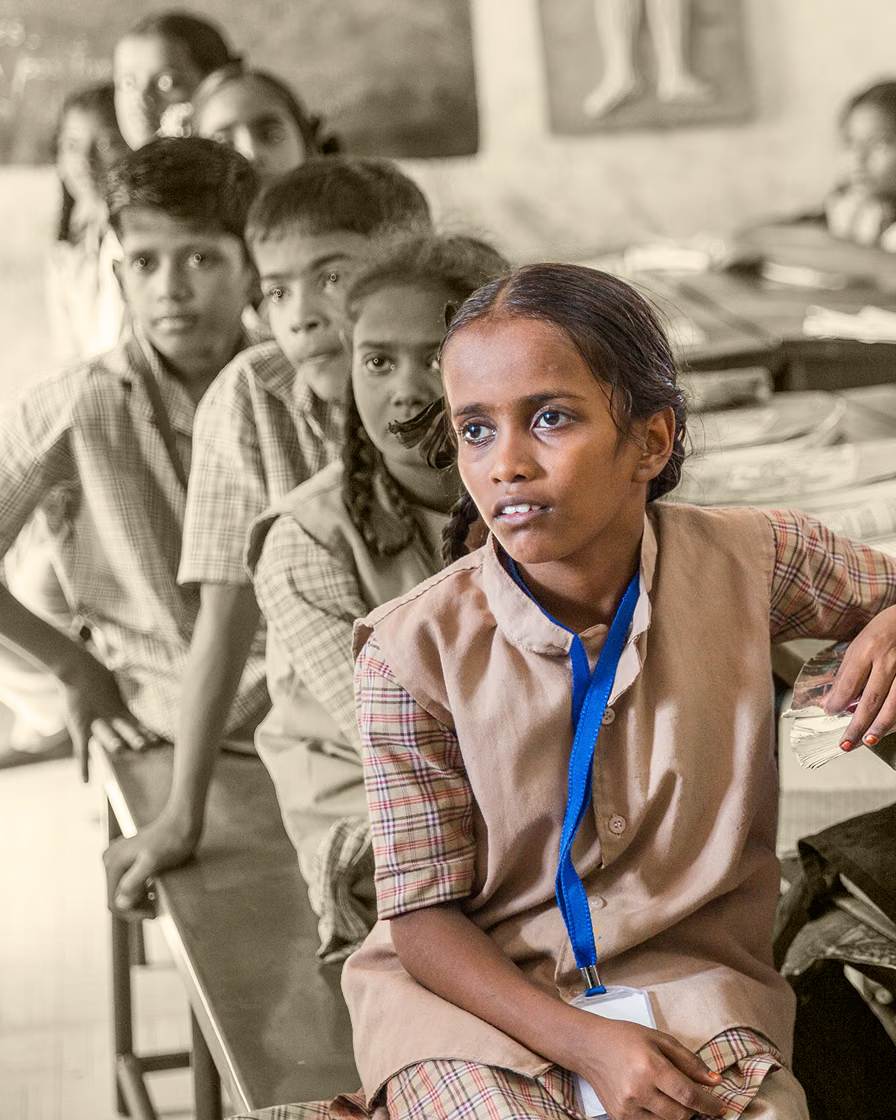
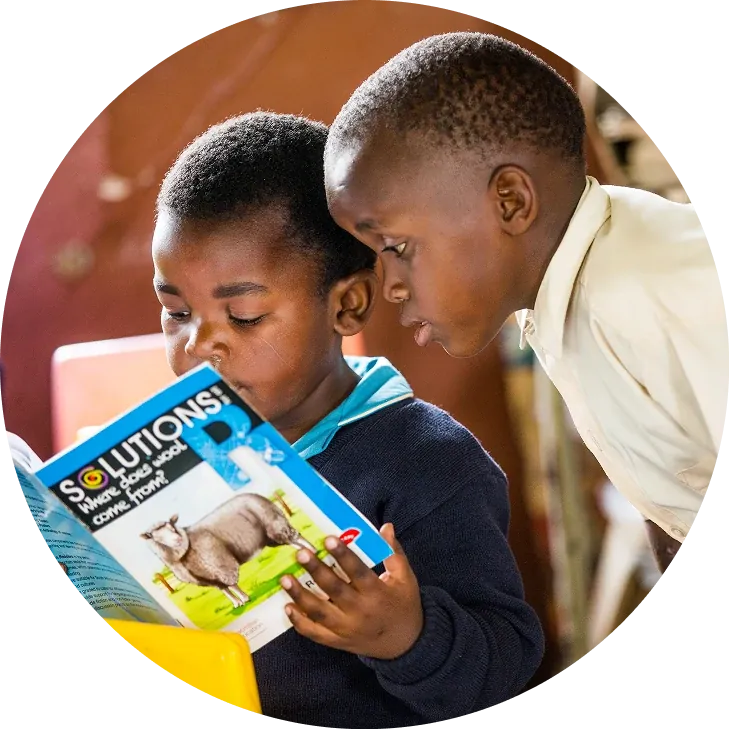
In some parts of the world, a single teacher manages 60 or more students in each classroom, often across multiple grade levels—with almost no tools to know which children are falling behind until it’s too late. AI’s promise in education lies in its ability to amplify teachers’ impact, helping them better understand where students are struggling, tailor support to individual needs, and spend more time on the complex, emotional work of educating the next generation. It can also serve as a tutor for every child, extending that same personalized attention beyond the classroom.
Today, a teacher might have their students fill out a worksheet or problem set, collect them at the end of class, go home, grade them, and then use the results to inform the next day’s lesson plan. It’s a lot of tedious work, but it’s necessary if they want to tailor their next lesson to the needs of every individual student.
AI tools are making that easier. Instead of collecting worksheets at the end of class, a teacher can collect them mid-lesson and, with the help of AI, get real-time guidance on who’s struggling with which concepts, and how to help.
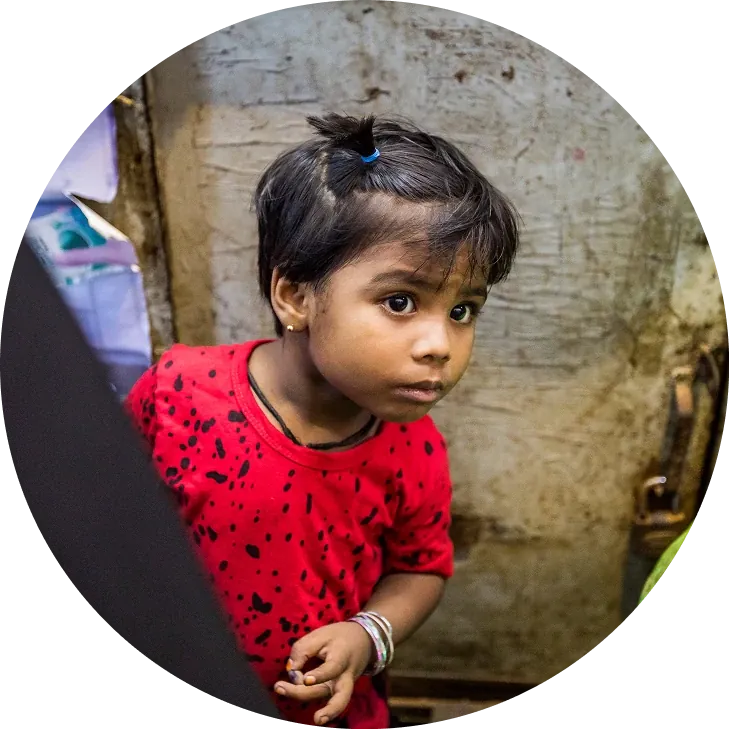
I believe human ingenuity should never be replaced.
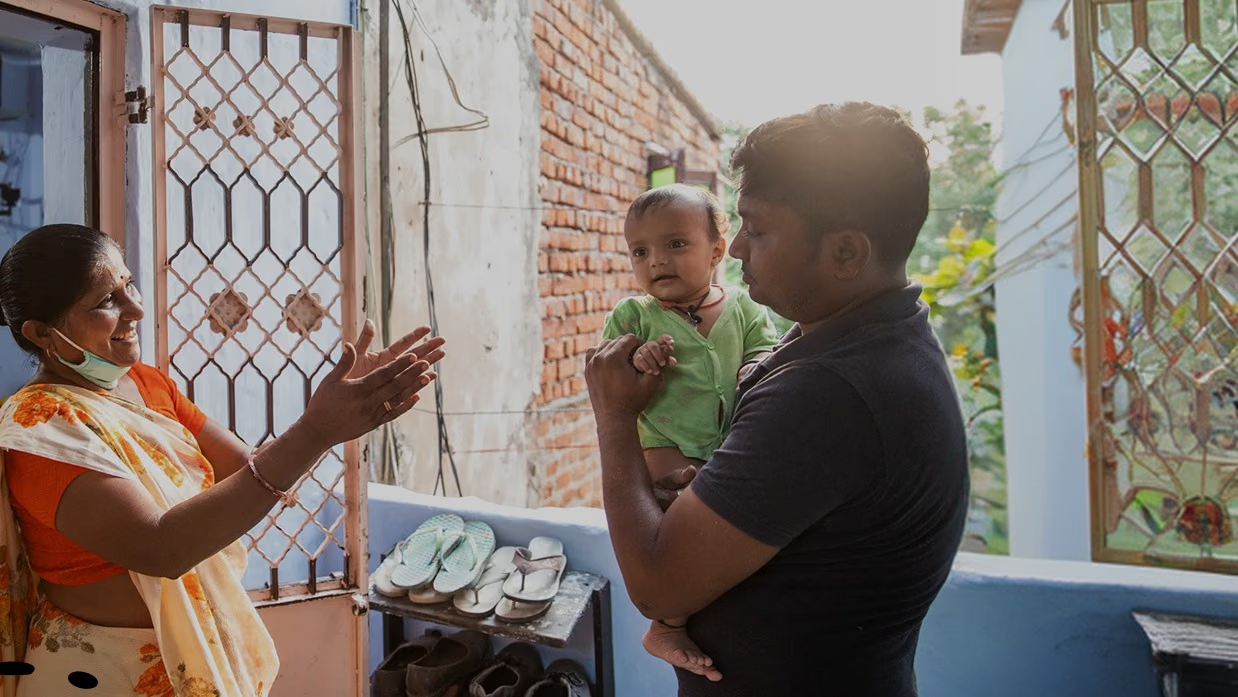
Make AIMatter forEveryone
We still have a choice. We can let AI follow the old pattern, where the people with the most resources benefit first and most. Or we can make a different choice: build it for people everywhere.
- 01Work in every language
- 02Grounded in local data, built for local realities
- 03Invest in people and access
Three things we need to get right
If AI is going to help improve the lives and livelihoods of the world’s poorest people, a few things need to happen in the next 12 to 18 months—and there are steps AI companies, governments, philanthropists, and many others can take right now.
I’m not suggesting there’s a magic three-step solution that will make AI accessible and beneficial for everyone. But these are three fundamental building blocks we can prioritize now to make a big difference.
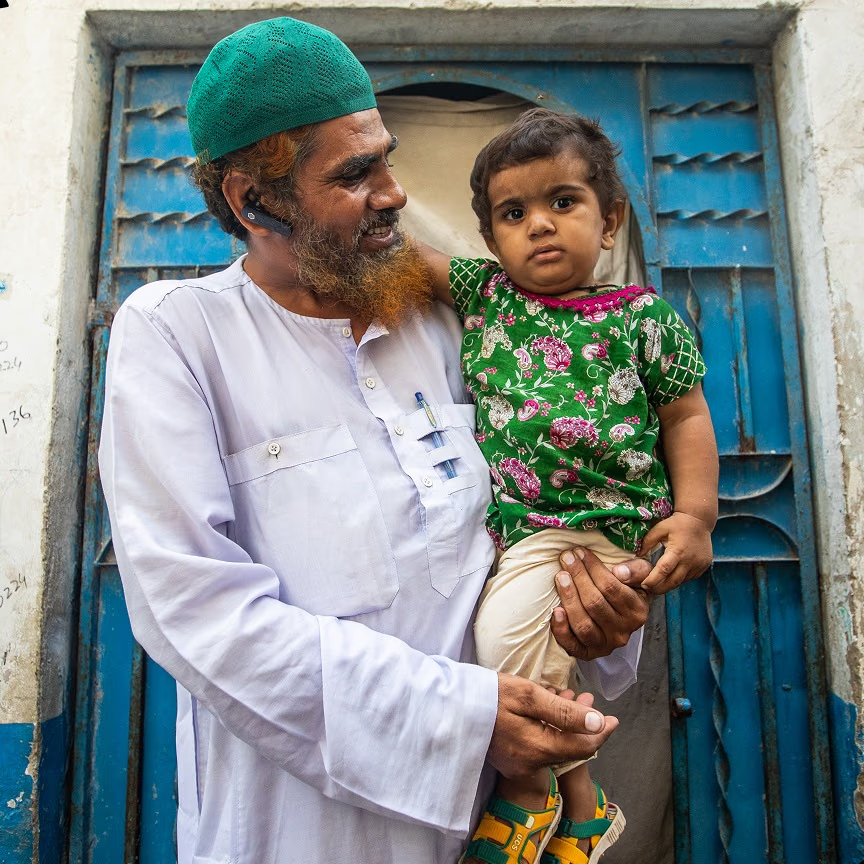
01Work in every language
First, AI tools have to work in every language people speak.
Most of the world is invisible to today's AI models. These AI systems were trained primarily on what exists on the internet—and the internet reflects a deeply unequal world. More than 90 percent of the data used to train early, large language models came from English-language sources. The communities that stand the most to gain from AI are largely absent from the knowledge base these tools are built on. They are not just underserved. They are not in the picture at all.
Every month, AI gets sharper and more capable for the one billion (mostly English-speaking) people who already have access and stays the same for the other seven billion people on earth.
In English, leading AI speech recognition systems make errors less than 6 percent of the time. In Yoruba, that same system fails more than 60 percent of the time.
It is not just everyday vocabulary that matters. A striking example comes from Malawi, where a woman in labor might say her “water has broken” in Chichewa. Translated directly to English, it would sound like she has simply “thrown away water.” That mistranslation could be the difference between timely, urgent medical advice and tragedy.
If AI is going to improve health on a continent with more than 2,000 languages, it has to understand what and how people actually speak—their dialects, accents, and slang, too.
This requires investment in local language datasets and evaluations tailored to how people use language in the places these tools are meant to serve.
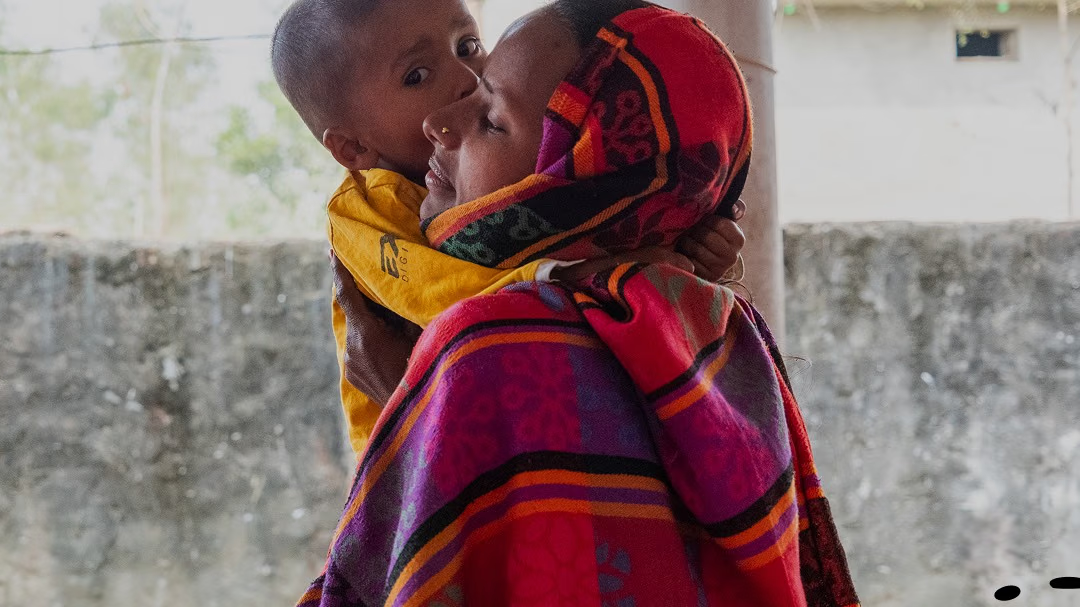
Grounded in local data, built for local realities
Second, these tools have to be grounded in local data and built for local realities.
Language is only the beginning. An AI tool built for a commercial farmer in Iowa is not necessarily ready for a smallholder farmer in Ethiopia. Smallholder farmers often grow several crops on a small plot, rely on family labor, have limited access to credit and insurance, and make decisions in conditions where a failed harvest can threaten both their income and their family’s food supply. An effective tool must understand that reality—as well as the crops they grow, the pests they face, the cost and availability of inputs in local markets, and what the weather is likely to do in their specific region.
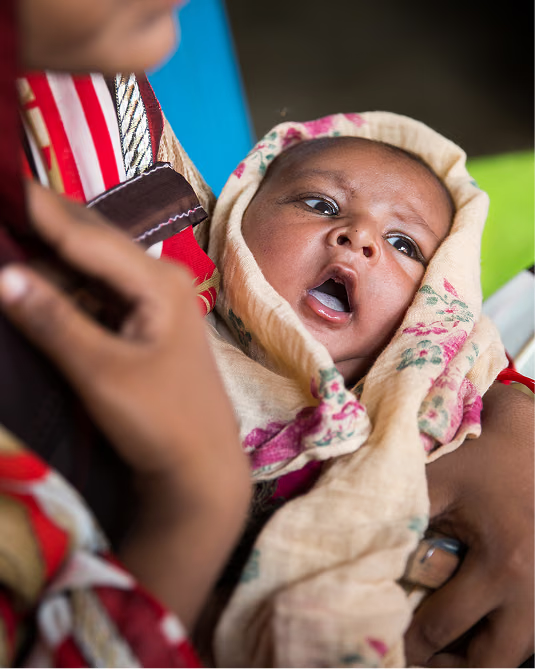
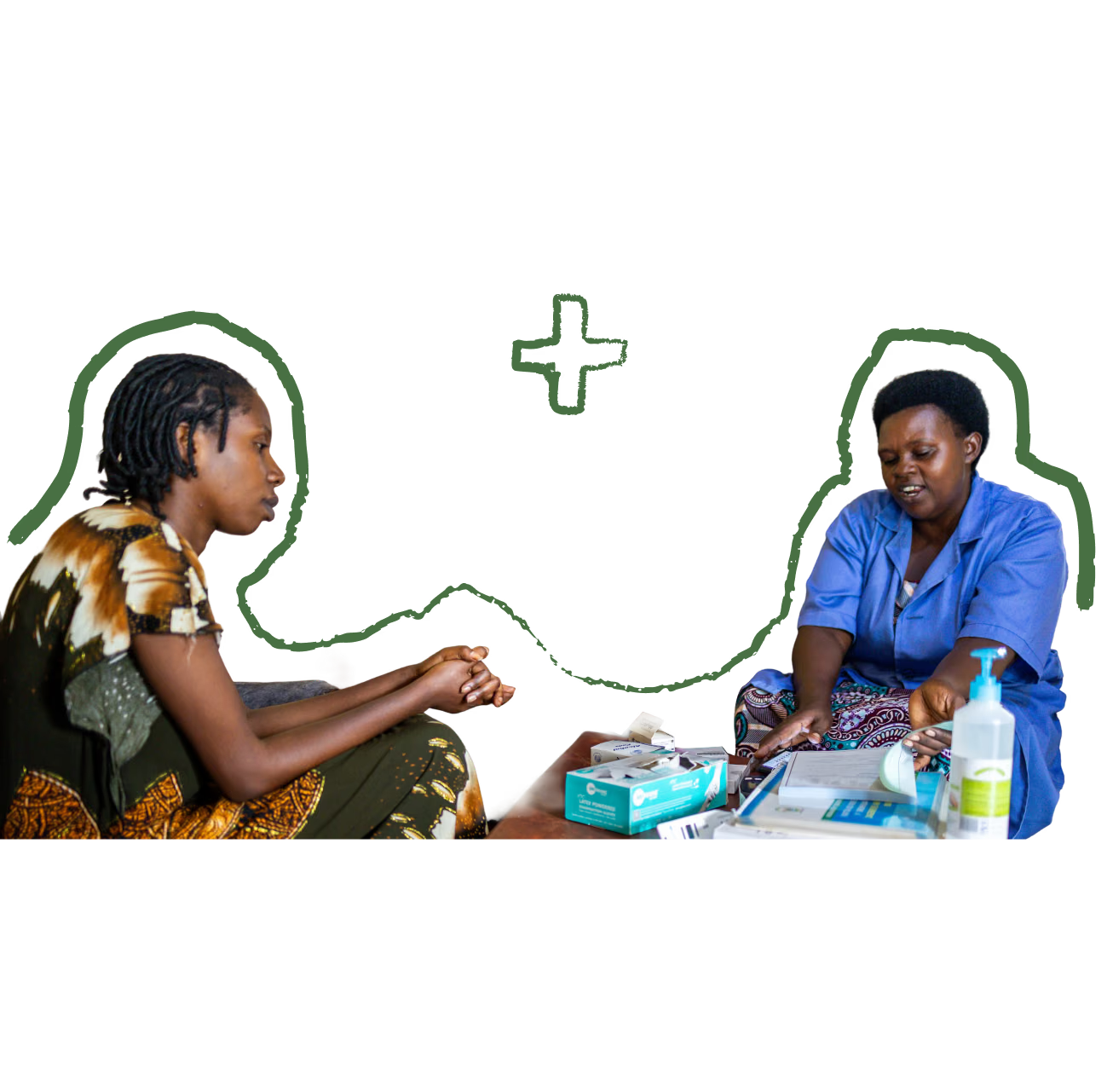
The same is true in health. Global health guidelines already exist. The work now is making those guidelines locally relevant: incorporating the right epidemiology for a specific country, the treatment options actually available in that health system, the operating conditions of the clinics where health workers are making decisions. A community health worker in Rwanda examining a baby with a fever faces different questions than a clinician in a well-resourced hospital—and the AI supporting her needs to reflect that.
This is a data problem as much as a design problem. Building AI that works in every setting requires collecting the right local data—health records, farming outcomes, weather trends, student learning patterns—from the places and populations the tools are meant to serve. Countries should be able to decide on the best way to manage and protect that data, including how it is stored and on what terms it is shared, and with whom.
Both closed and open AI systems have a role to play—what matters is not which model a country uses but whether it works for their specific needs, at a cost and on terms they can sustain.
The good news is that this investment compounds over time. AI systems that start with good local data and are tested against real-life decisions—not just impressive demonstrations—get better the more they are used. People trust tools they’ve personally tried. The real test isn’t whether it sounds impressive, but whether it actually works.
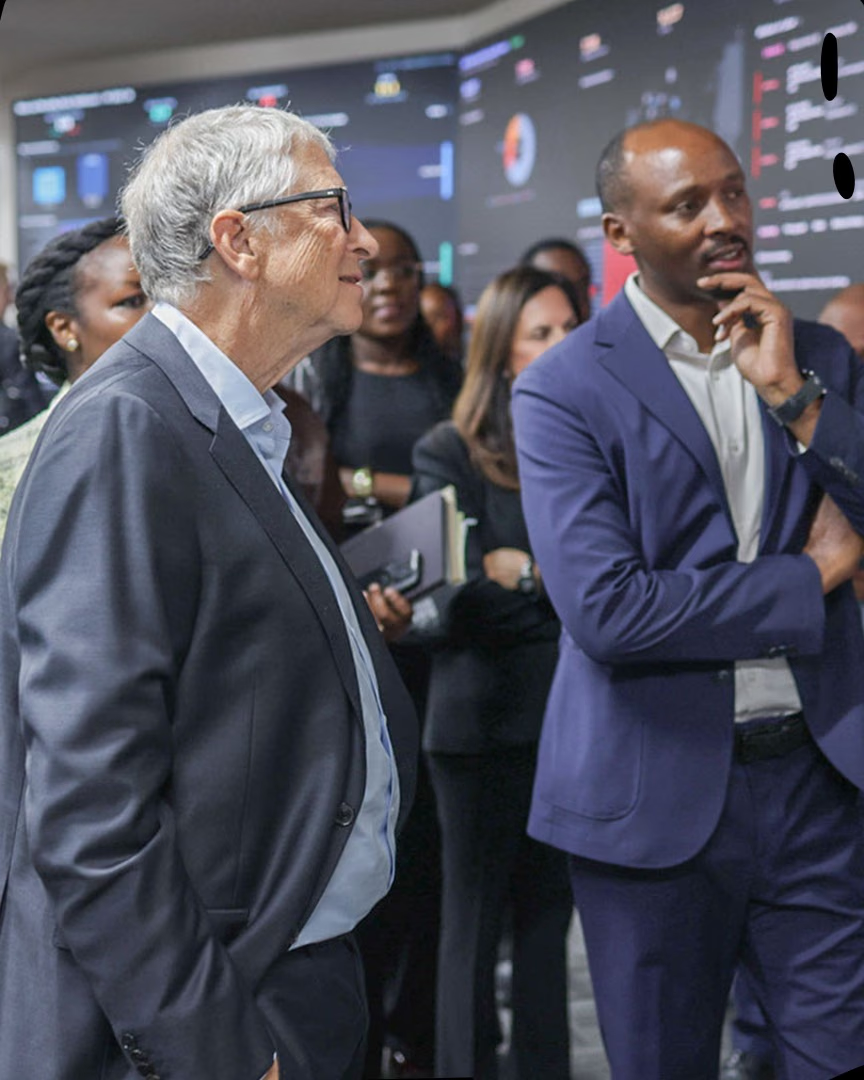
Invest in people and access
Third, invest in the people and access to make AI work.
Whether a promising AI pilot actually helps millions of people depends on two things the world isn't investing in enough: people and access.
On people: the communities with the most to gain need local AI leaders at every level—policymakers and technologists who shape how AI enters their countries, and doctors, agronomists, teachers, and data scientists who understand these tools deeply enough to evaluate them, adapt them, and hold them accountable. That means creating real pathways to technical AI expertise in these countries: college programs, master's degrees, and hands-on training that give the next generation the knowledge to lead this work themselves, not just use the tools someone else built.
On access: none of this is possible without meaningful access to AI models and the ability to run them where they're needed. Right now, that access is highly concentrated in wealthy countries—and the barriers go beyond price alone. Changing that will require a mix of approaches: price reductions, commitments from AI companies to make their models and computing resources available, and government and philanthropic funding, among others.
The goal is not for AI to be designed somewhere far away and handed to communities to figure out. It is for the communities with the most to gain to develop the knowledge and the agency to shape how it works for them.
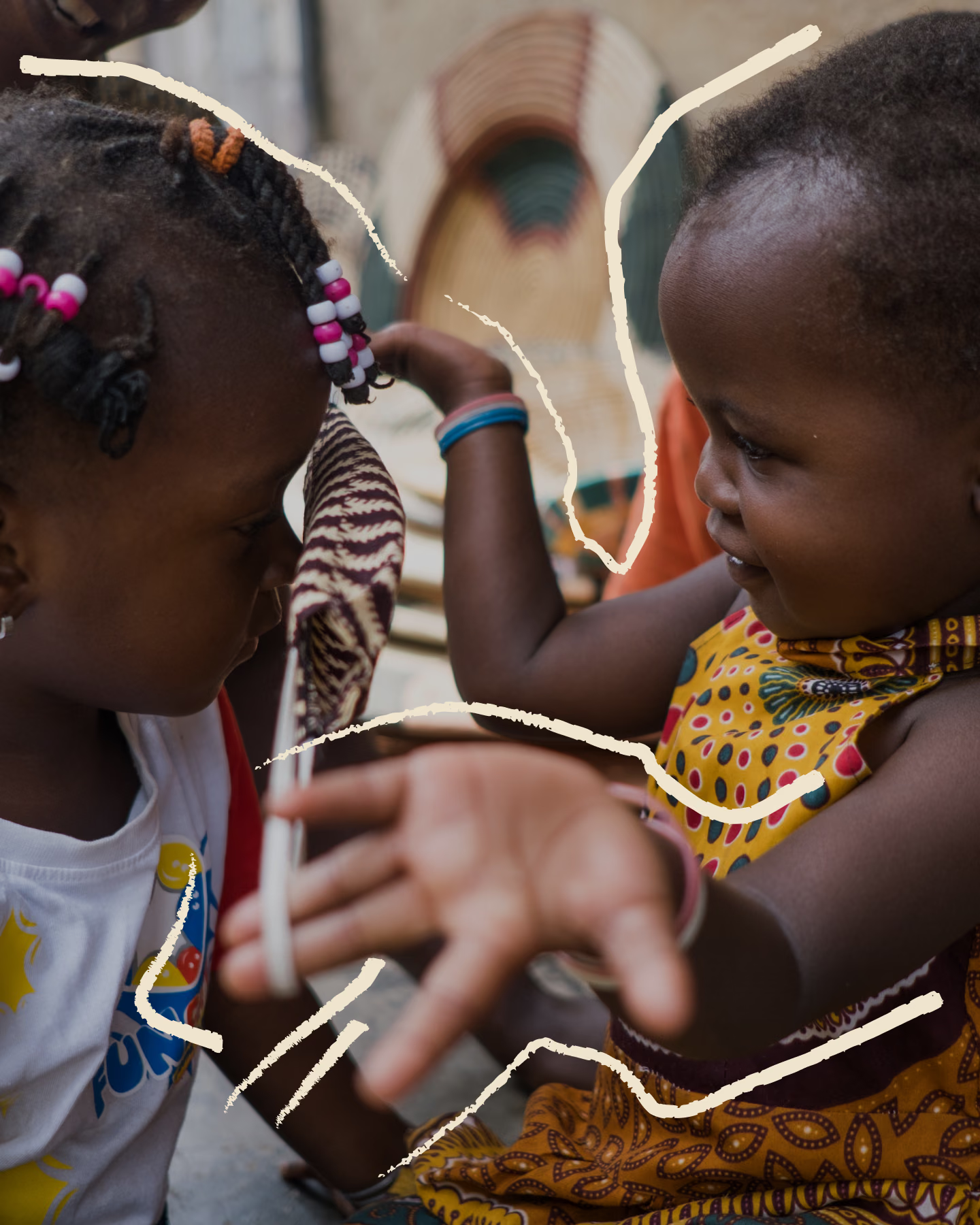
Making this matter for everyone
A world of greater productivity should make people's lives better. But history has shown us that greater productivity and more resources do not automatically produce better life outcomes—more purpose, ease, or peace. The choices being made now about AI are choices about what kind of world we want to leave the next generation.
Imagine what that could look like.
A pregnant woman could ask a question in her own language at home, late at night, without traveling miles to a clinic. A farmer could catch one sick plant before it becomes a lost harvest—and another season of hunger. A student who gets stuck on a lesson could get help getting unstuck, while her teacher gets a clearer picture of where she needs support.
These are not small things. They're the moments that decide whether progress reaches a family when it matters, or not at all.
AI is moving fast. The market will not wait. The systems being built now will shape who benefits for years to come.
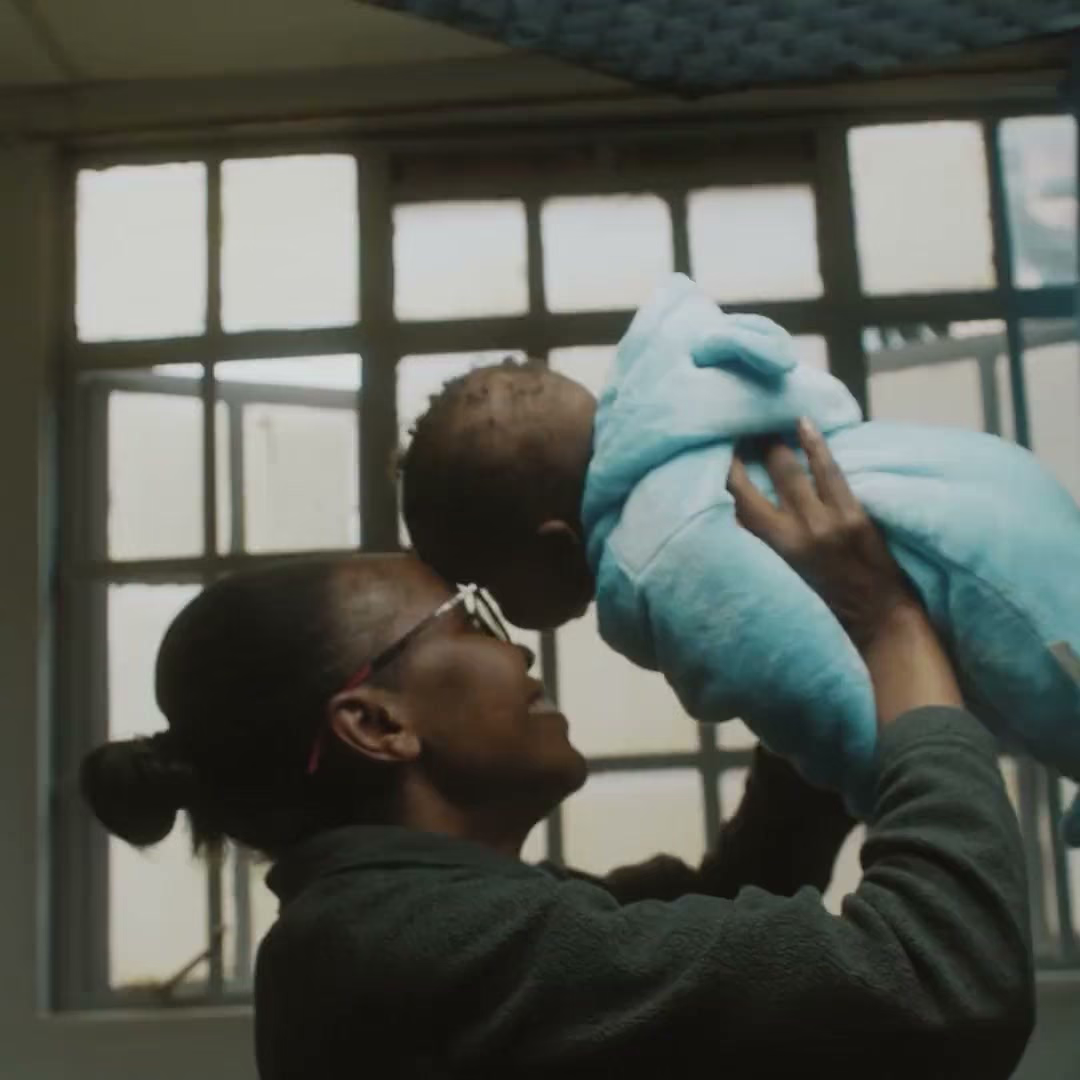
We still have a choice—AI companies, governments, and philanthropies. We can let AI follow the old pattern, where the people with the most resources benefit first and most. Or we can make a different choice: build it for people everywhere.
Let's make this matter.
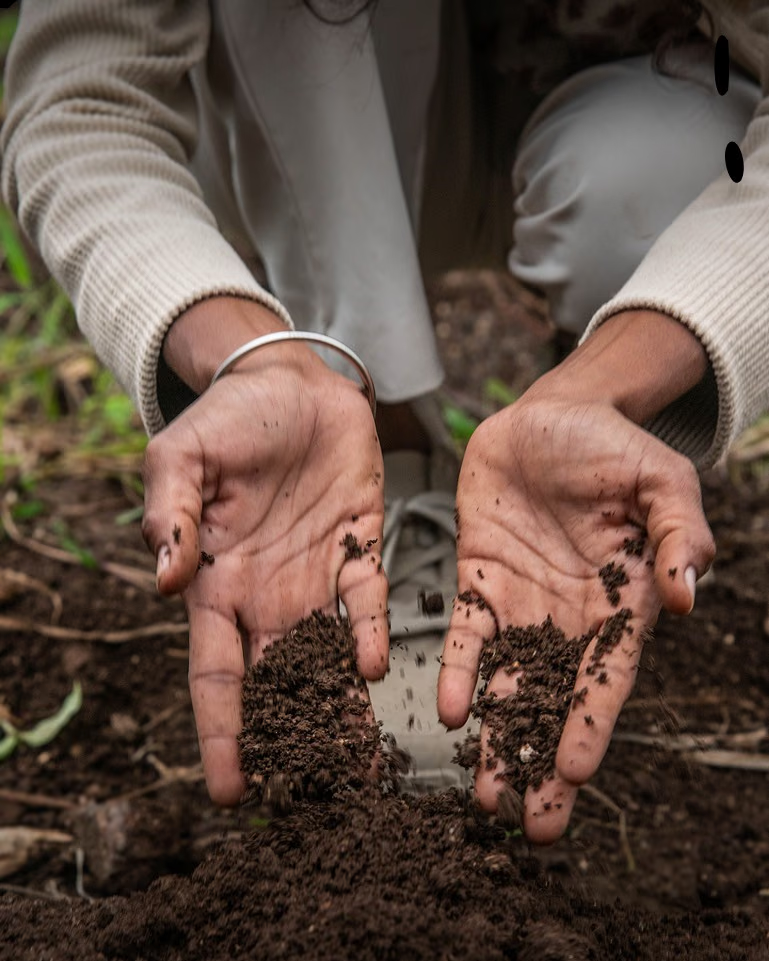
Real Work.Real Impact.
Four AI tools. Four frontline workers. Already making a difference.
Early evidence shows what's possible.
The people making critical decisions every day—on farms and in hospitals, classrooms, and communities—see the challenges and opportunities of AI even more clearly than I can. They know what it means when a mother has no expert clinician nearby, when a farmer has no one to call, or when a teacher is trying to help 30 students who are all struggling in different places.
Early evidence suggests that tools built for frontline workers are already making a big difference. Here are four tools I’m excited about—ones that show what becomes possible when frontline workers have the support they need.
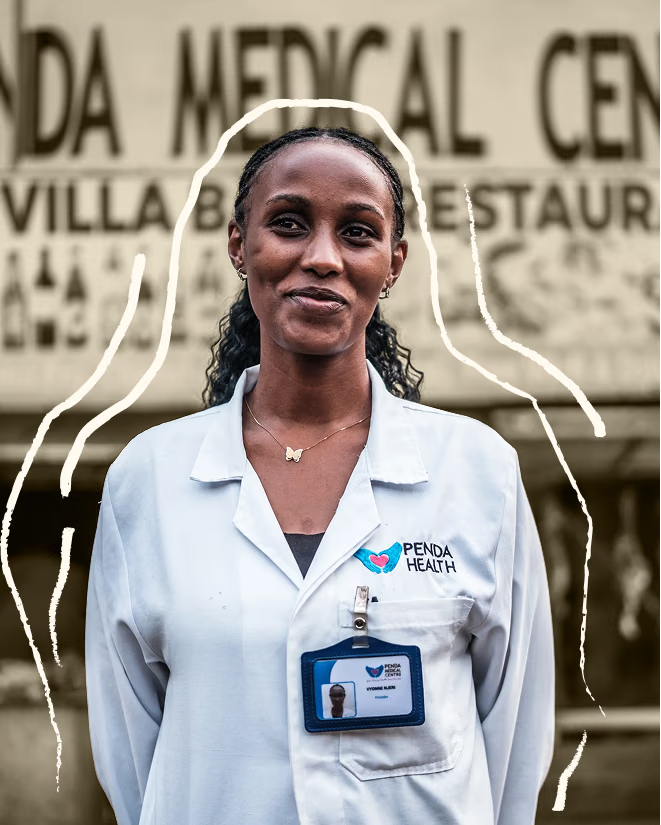
PENDA HEALTH
+16percentage points
In diagnostic accuracy
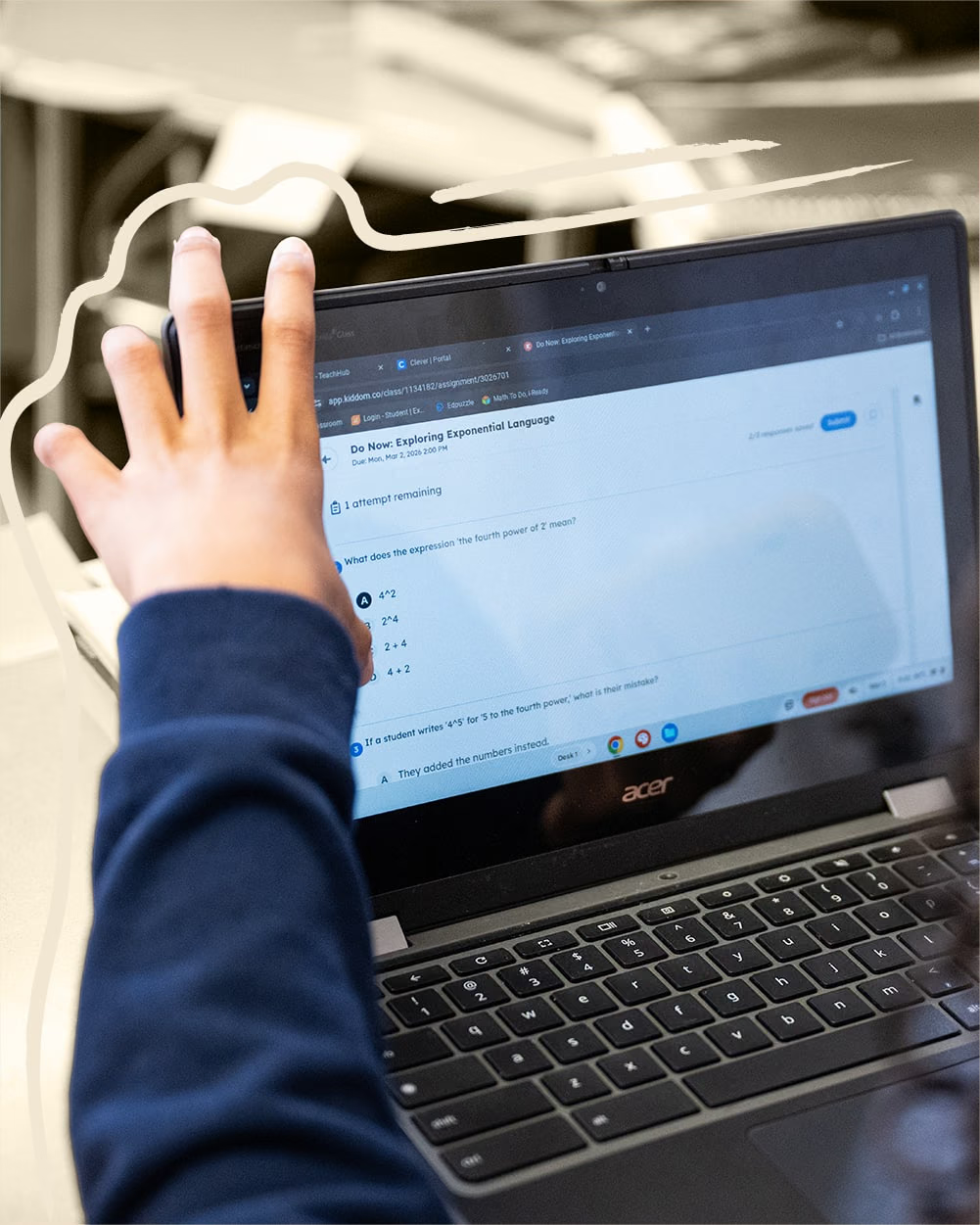
KIDDOM ATLAS
+6months
of additional learning in a single school year
GEMINI GUIDED LEARNING
+1.7years
of learning
MahaVISTAAR
<0.18cents
per farmer
Guest Essays
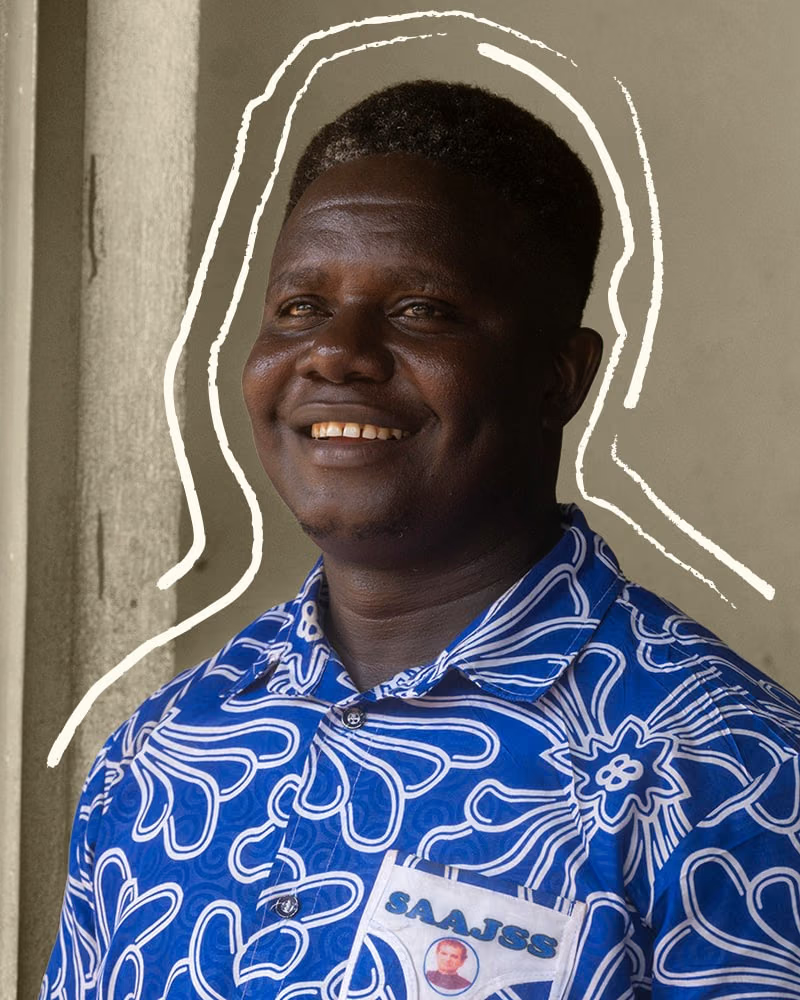
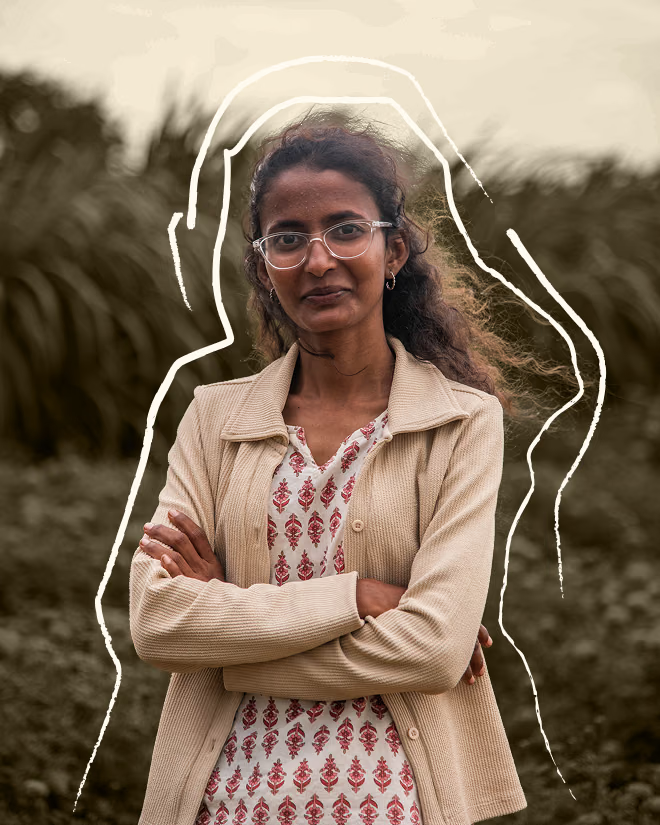
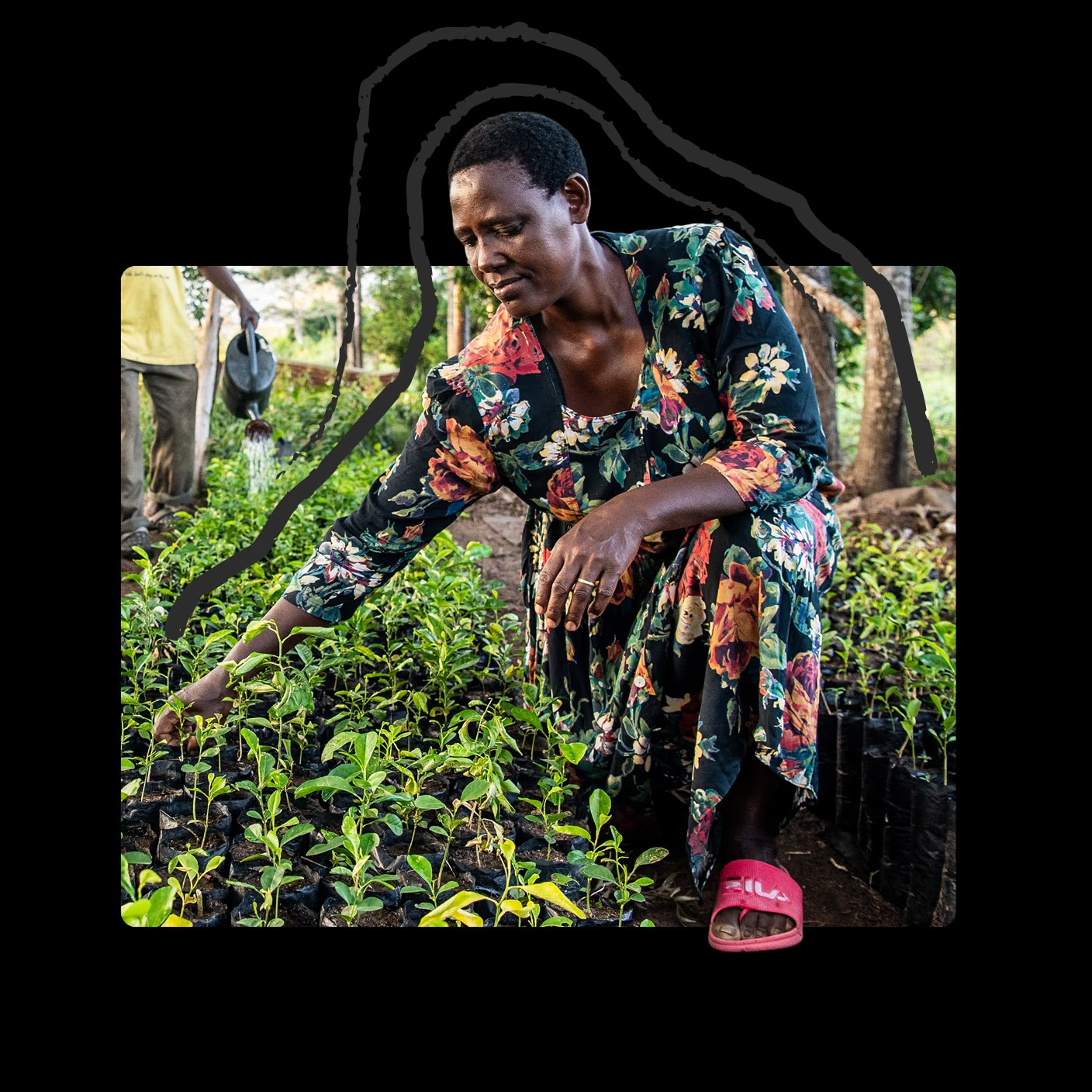
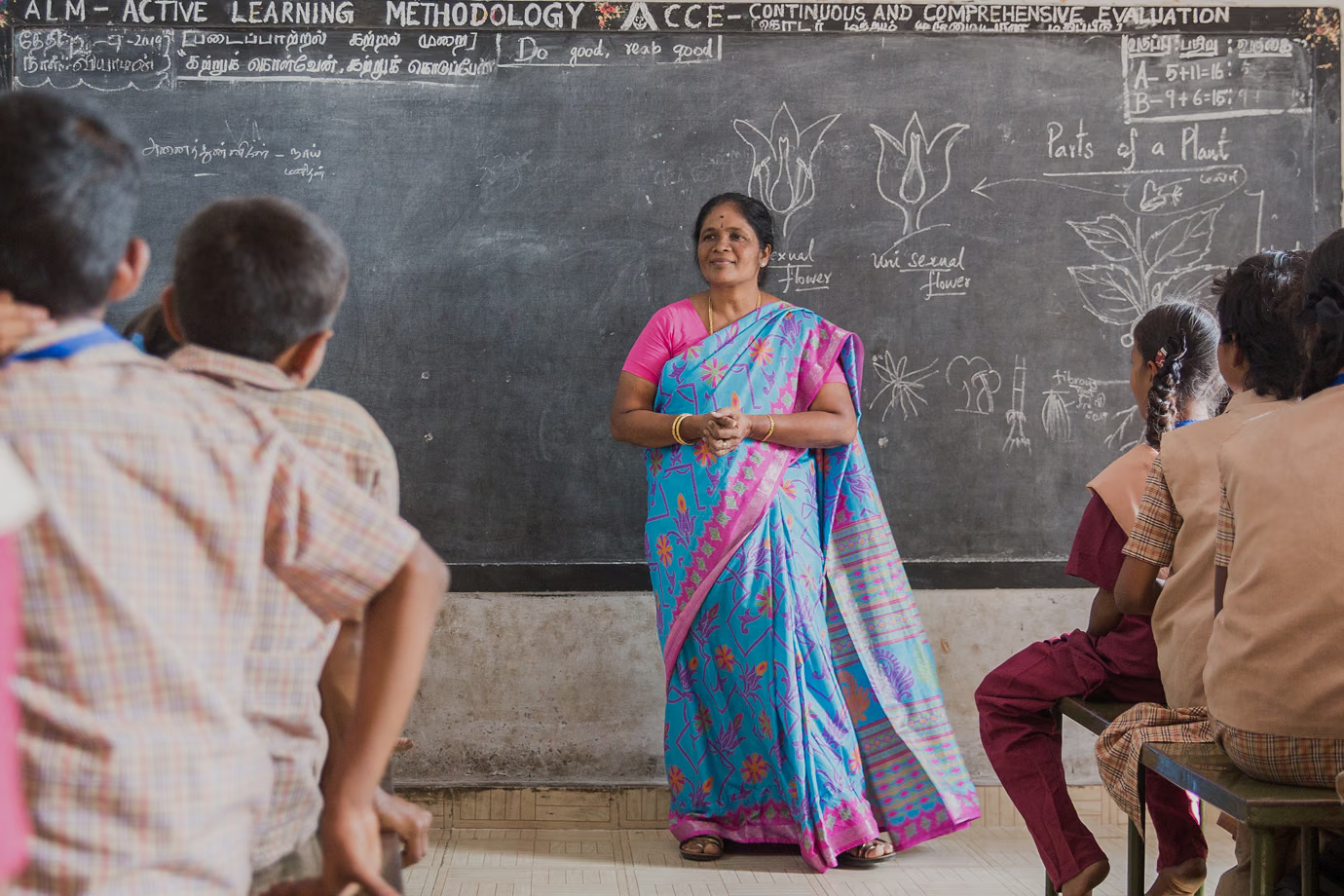
In the essays that follow, you’ll hear from four people using these tools in health, agriculture, and education. They understand not only what AI can do but what it will take to make it useful in the real world.
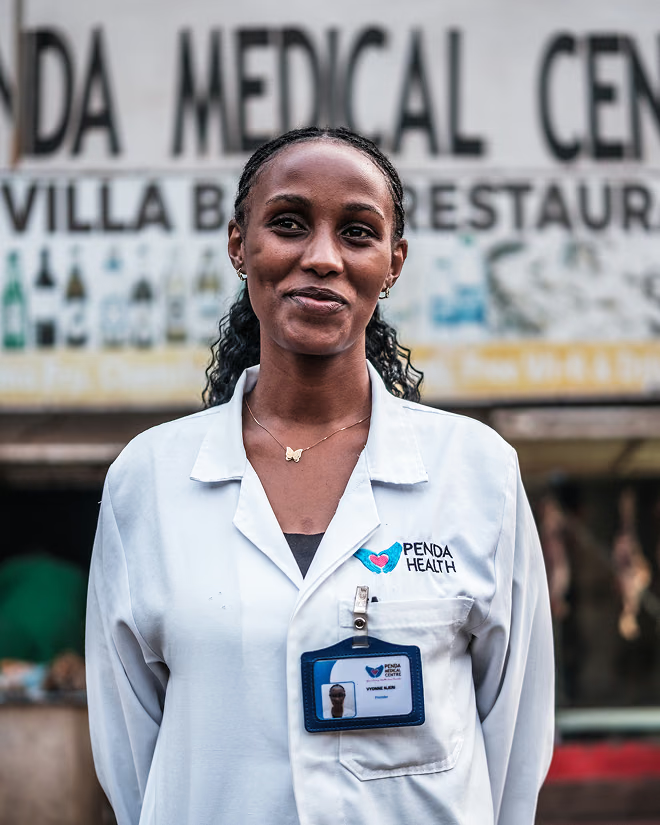
I’m still the provider. AI has my back.

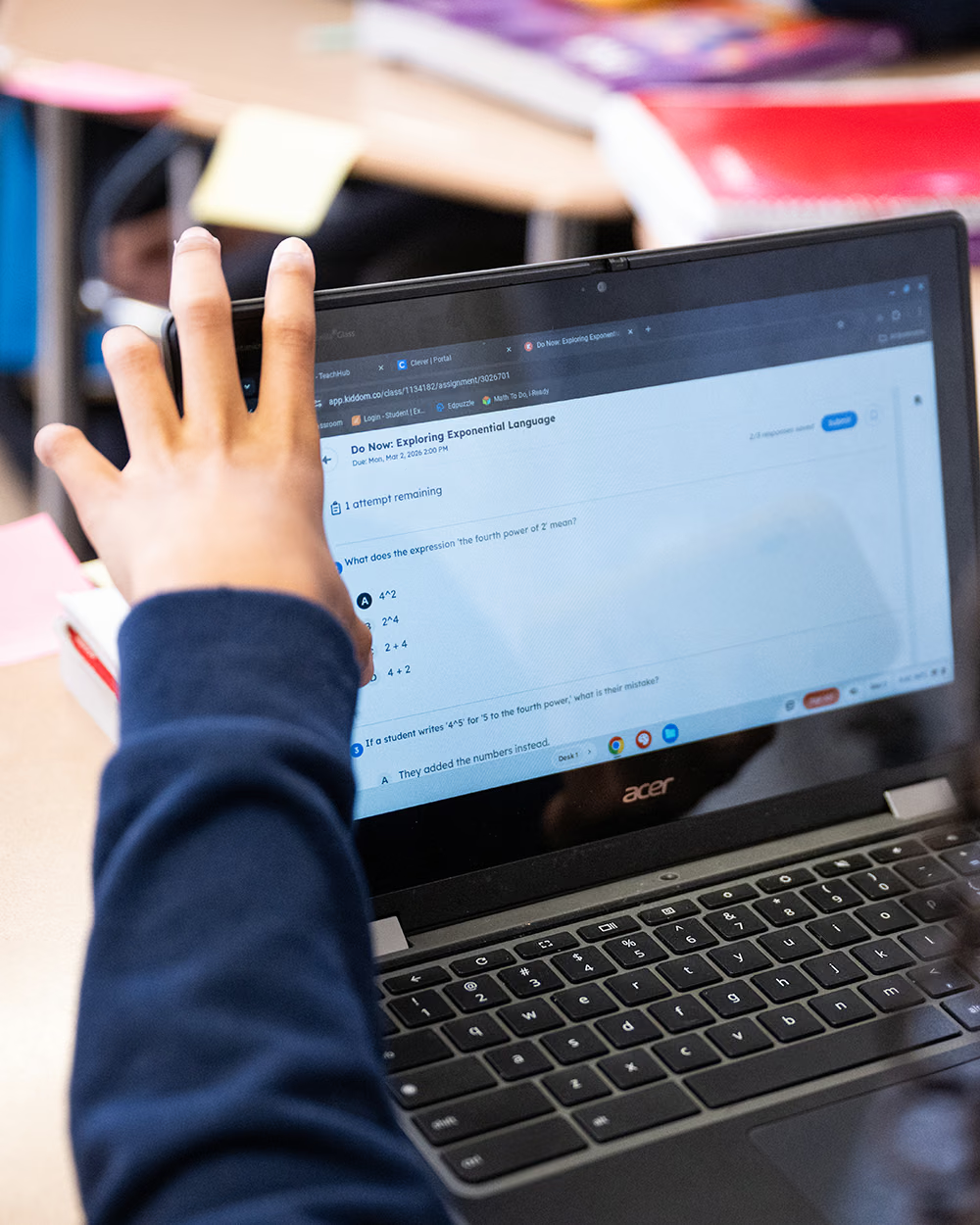
Meeting every student’s needs

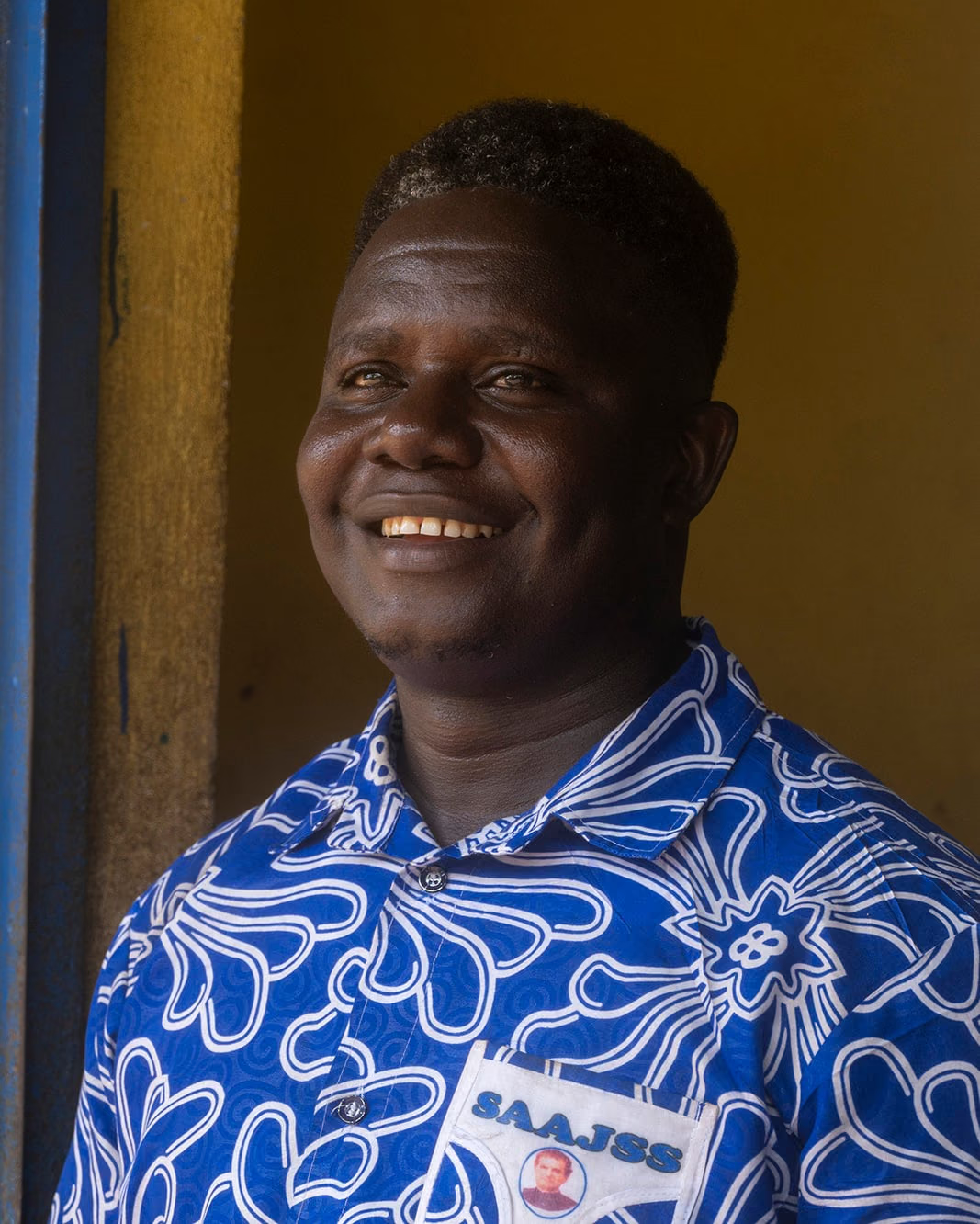
A tool that’s helping change the numbers
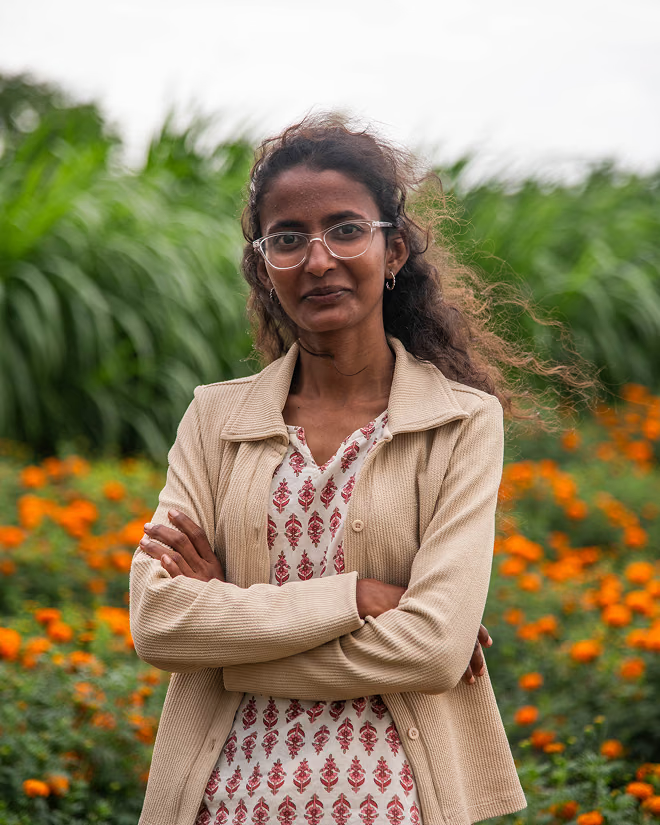
Better advice, better harvests

A FinalThought
AI can make the difference
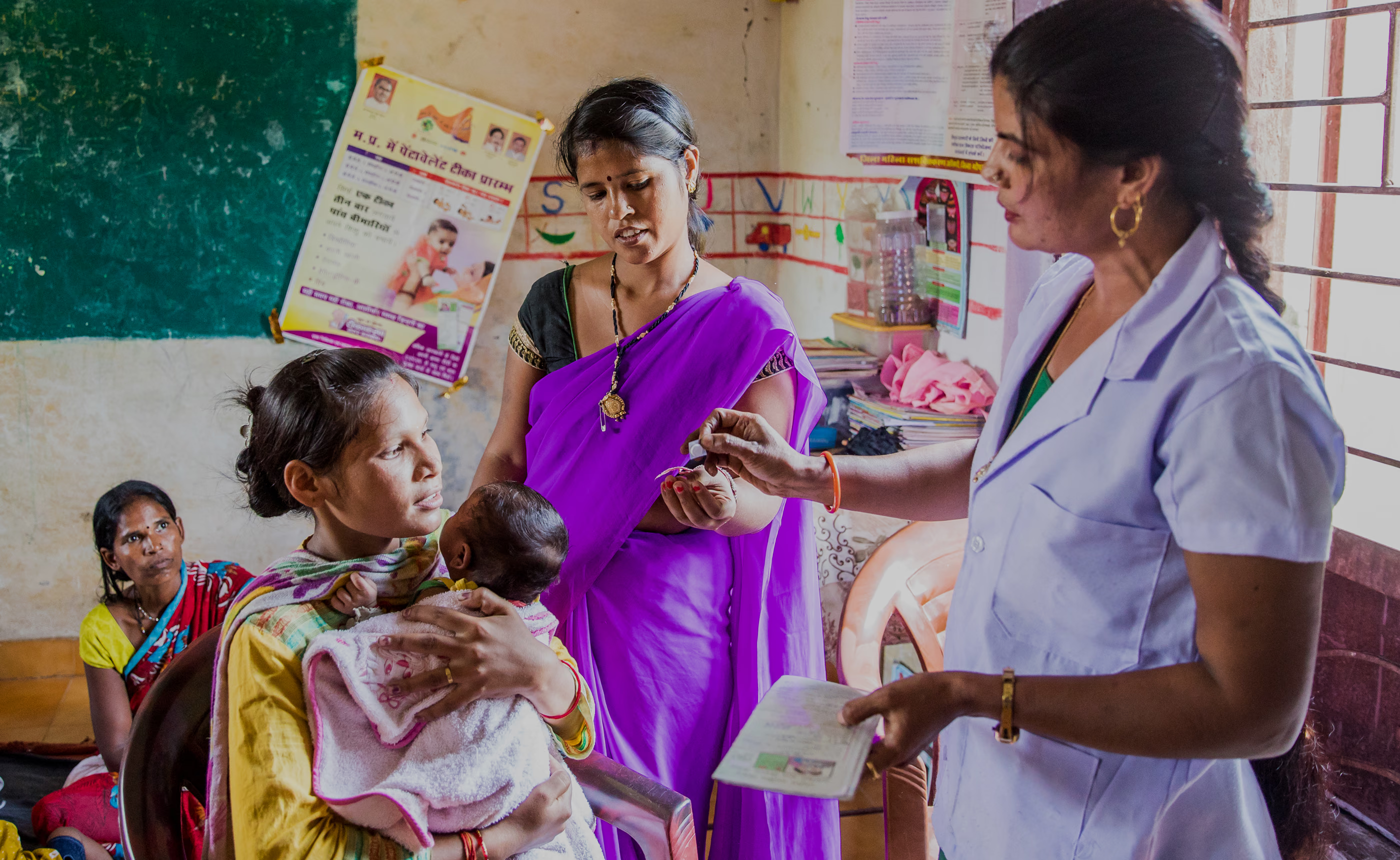
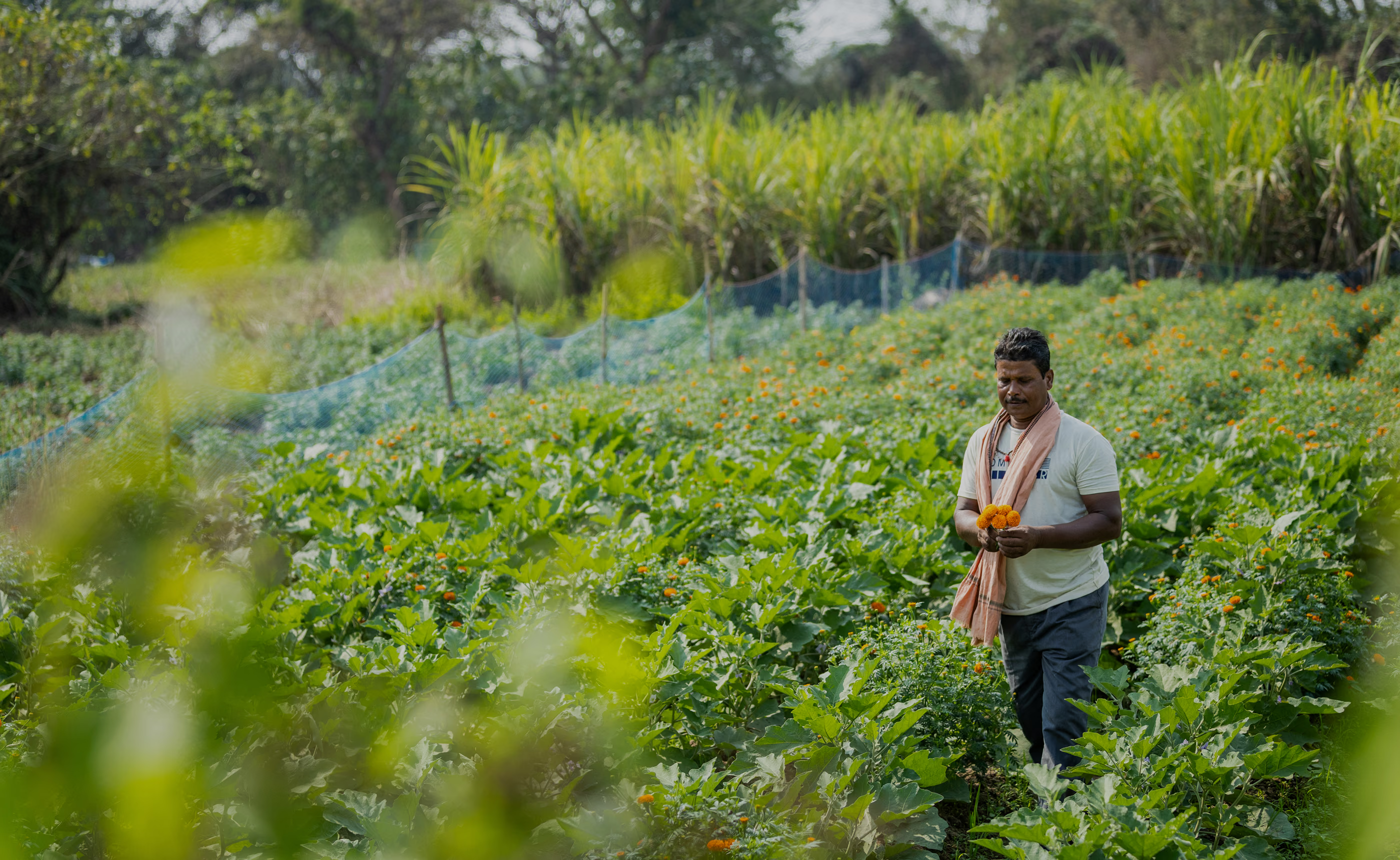
A harvest saved
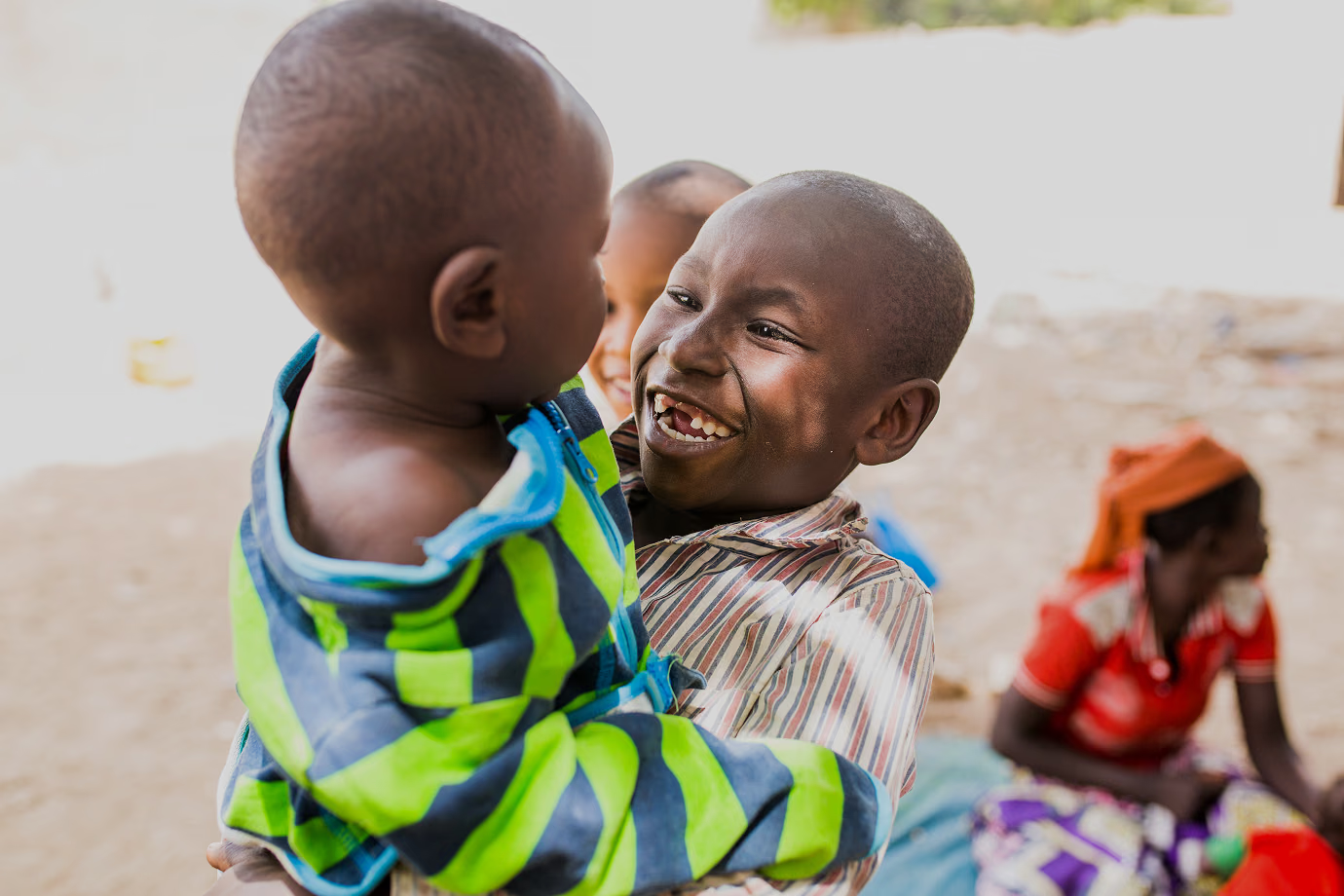
a child who learns to read
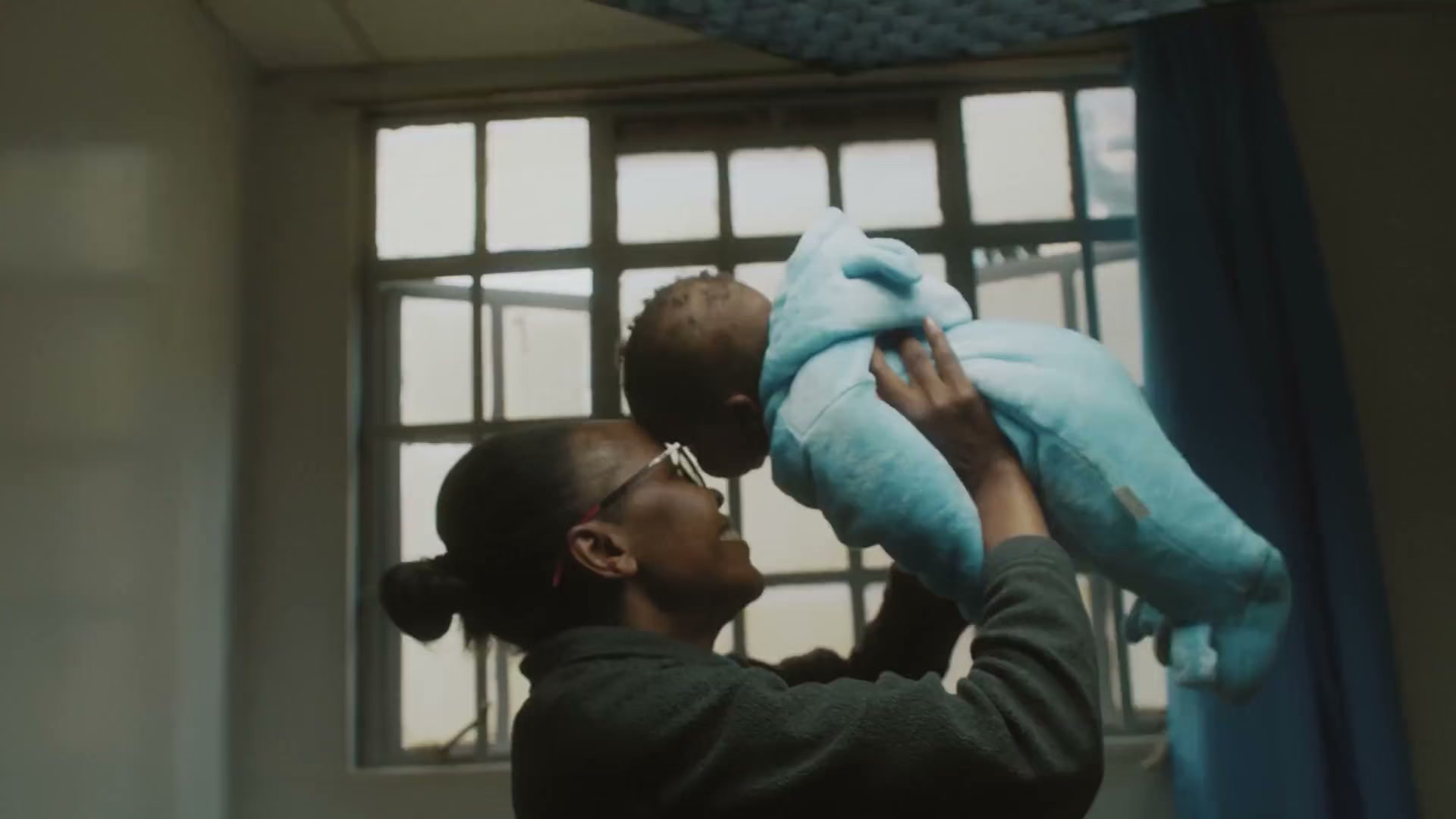
Track the Sustainable Development Goals
In 2015, 193 world leaders agreed to 17 ambitious Sustainable Development Goals (SDGs) to end poverty, fight inequality, and improve health by 2030. Goalkeepers works to accelerate progress toward these goals, focusing on Goals 1 to 6.
Each year, the Goalkeepers Report tracks 18 key indicators—from poverty to education—offering the latest estimates on where innovation and investment are driving progress, and where we're falling short. These data remind us that progress is possible but not inevitable.
With just four years left, the world is off track. It’s clear: urgent action is needed to meet the SDG targets and create a more equitable, safer future for all by 2030.
 No Poverty
Poverty
 Zero Hunger
Stunting
Zero HungerAgriculture
 Good Health & Well-Being
Maternal Mortality
Good Health & Well-BeingUnder-5 Mortality
Good Health & Well-BeingNeonatal Mortality
Good Health & Well-BeingHIV
Good Health & Well-BeingTuberculosis
Good Health & Well-BeingMalaria
Good Health & Well-BeingNeglected Tropical Diseases
Good Health & Well-BeingFamily Planning
Good Health & Well-BeingUniversal Healthcare Coverage
Good Health & Well-BeingSmoking
Good Health & Well-BeingVaccines
 Quality Education
Education
 Gender Equality
Gender Equality
 Clean Water and Sanitation
Sanitation
 Decent Work and Economic Growth